-
Regeneration
of the Museo Storico
Alfa Romeo -
Regeneration
of the Museo Storico
Alfa Romeo -
Regeneration
of the Museo Storico
Alfa Romeo
The rebirth of the temple
of a legendary automotive brand
Next to the Alfa Romeo manufacturing plants – an automotive company that has made a major contribution to the history of Italian industry and design – a headquarters complex with a museum celebrating the brand’s achievements had been developed from the 1960s onwards. In 2013, as part of the relaunch of the Alfa Romeo brand, then FCA’s CEO Sergio Marchionne promoted an ambitious regeneration project to be completed in just 12 months, centred on a new museum concept.
Studio A. Ferraresi – AF Engineering was appointed to carry out construction design for the contractor at various levels and to coordinate the refurbishment works on behalf of the main contractor Gilardi.
-
Type:
Culture
-
Location:
Viale Alfa Romeo, Arese (Milan)
-
Year:2014-2015
-
Client:
Costruzioni Generali Gilardi
-
Budget:
€24 million
-
Type:
Culture
-
Location:
Viale Alfa Romeo, Arese (Milan)
-
Year:2014-2015
-
Services provided (Andrea Ferraresi):
- Construction Design
- Building Design
- Structural Design
- Redevelopment Coordination
-
Architectural design:
Studio Camerana & Partners, EP&S (engineering)
-
Client:
Costruzioni Generali Gilardi
-
Budget:
€24 million
Courtesy Museo Alfa Romeo – Arese
Project Features
From headquarters complex to brand centre
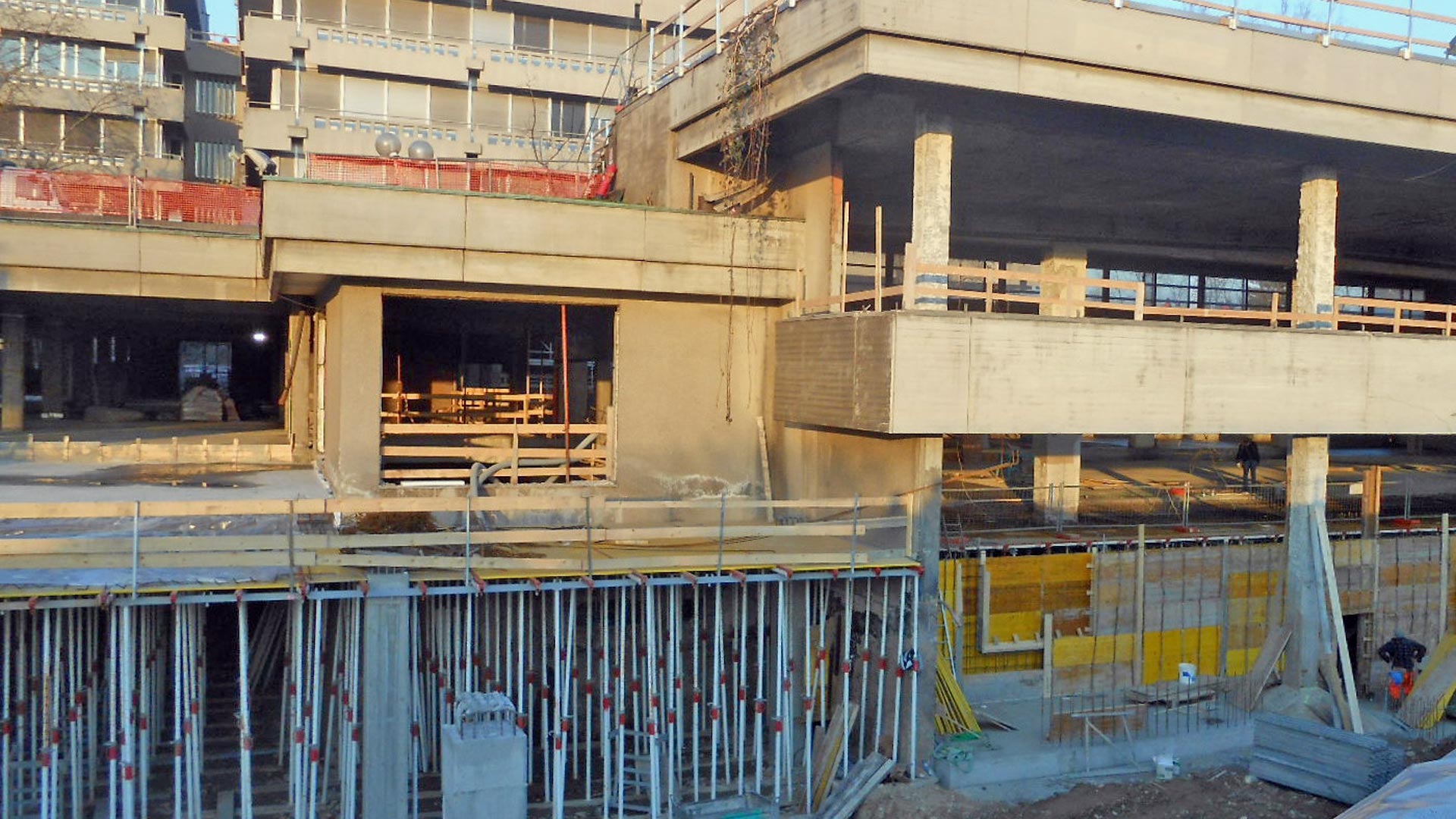
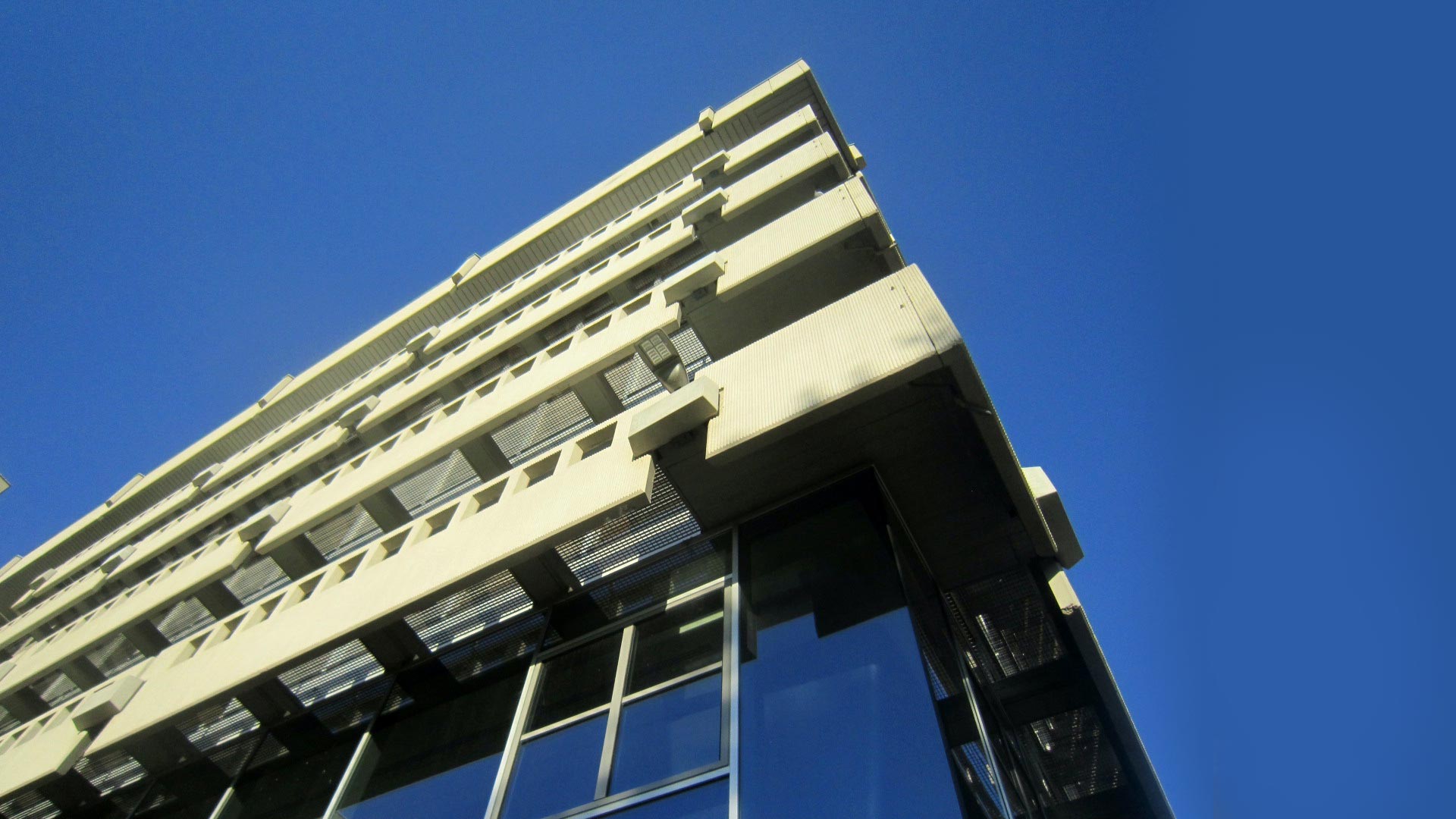
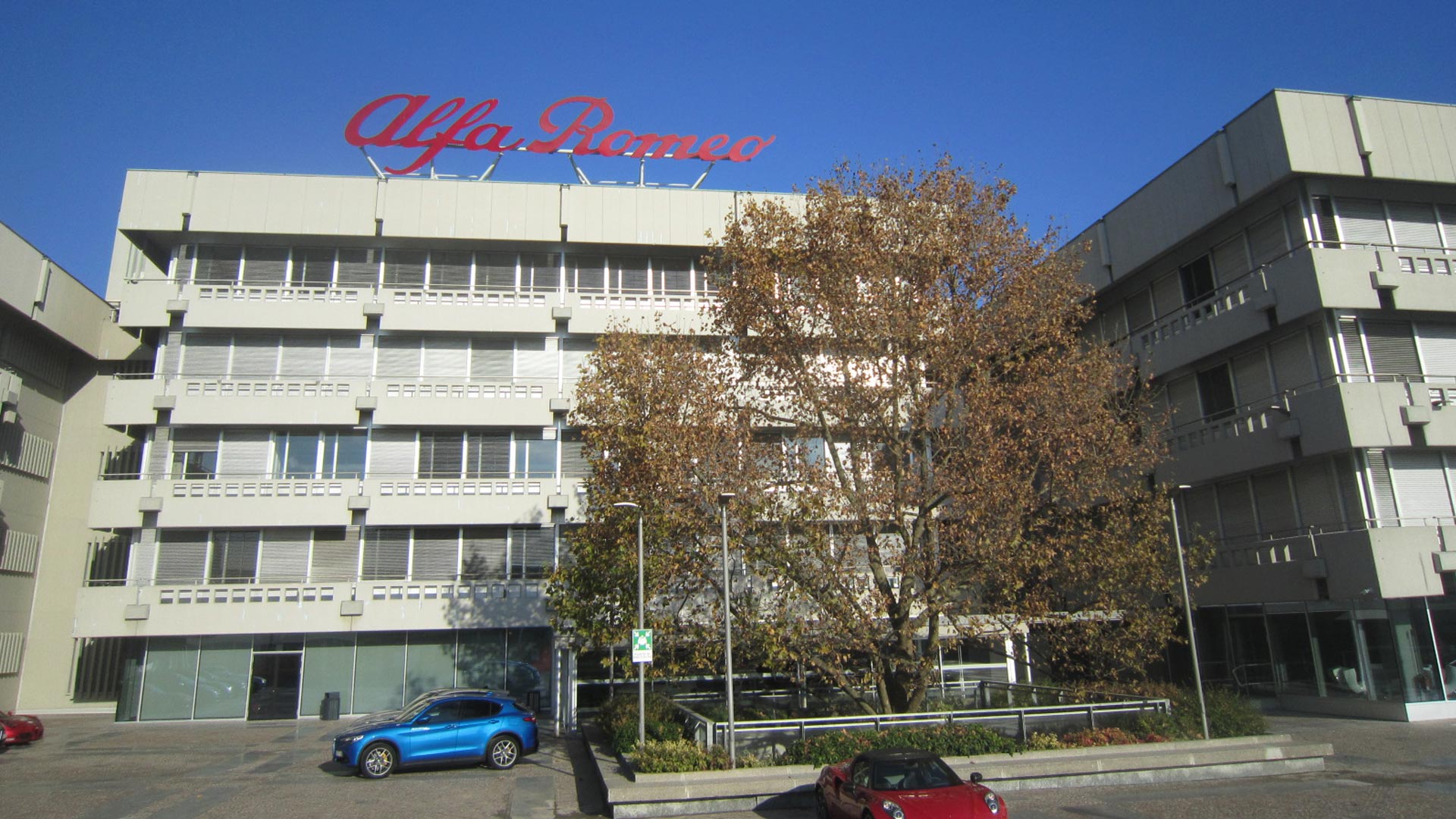
The large complex built between 1967 and 1976 by architects Gustavo and Vito Latis consists of four multi-storey steel and reinforced concrete buildings, originally housing the headquarters offices (Buildings A, B and C) and the historic museum (Building E), plus two semi-underground blocks accommodating the canteen (Building F) and the historic car workshop (Building D). The ensemble is linked by a central plaza raised above ground level.
The regeneration of this substantial built heritage was entrusted to the Turin-based architectural practice Benedetto Camerana & Partners, supported by EP&S for engineering services, with the aim of transforming the site into a true brand centre. The new programme includes exhibition spaces integrated with a documentation centre, a multi-purpose hall, an Alfa and Jeep showroom, a historic car storage facility (the Scuderia del Portello), headquarters offices, a bar-restaurant, a test track and a collection area for newly purchased vehicles. The project focused on a functional and image-driven reorganisation of the complex, while retaining the existing structures due to the protection constraints imposed by the Superintendency of Archaeology, Fine Arts and Landscape on both the museum building and its contents, as well as on the historic archive.
A captivating exhibition itinerary
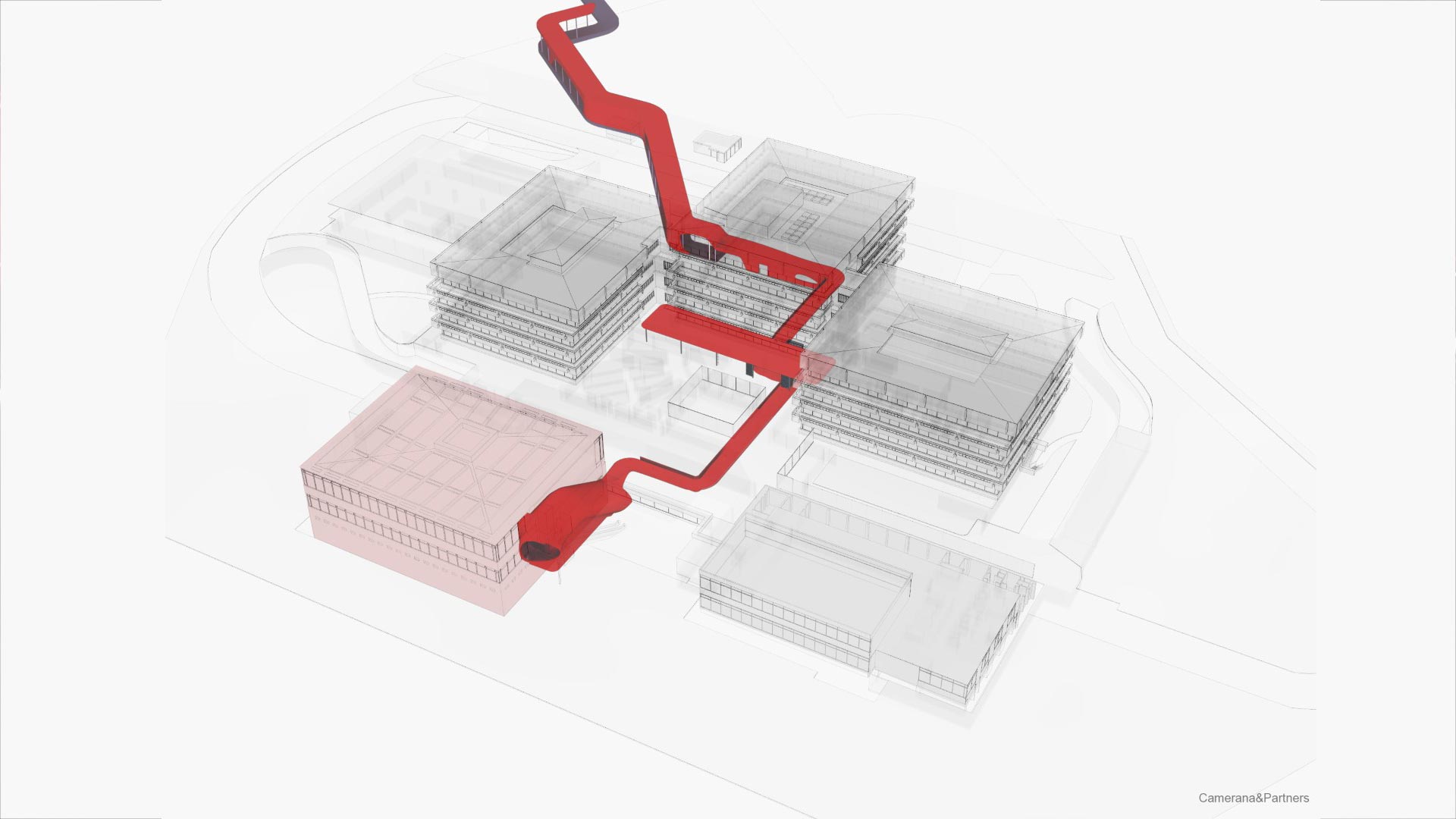
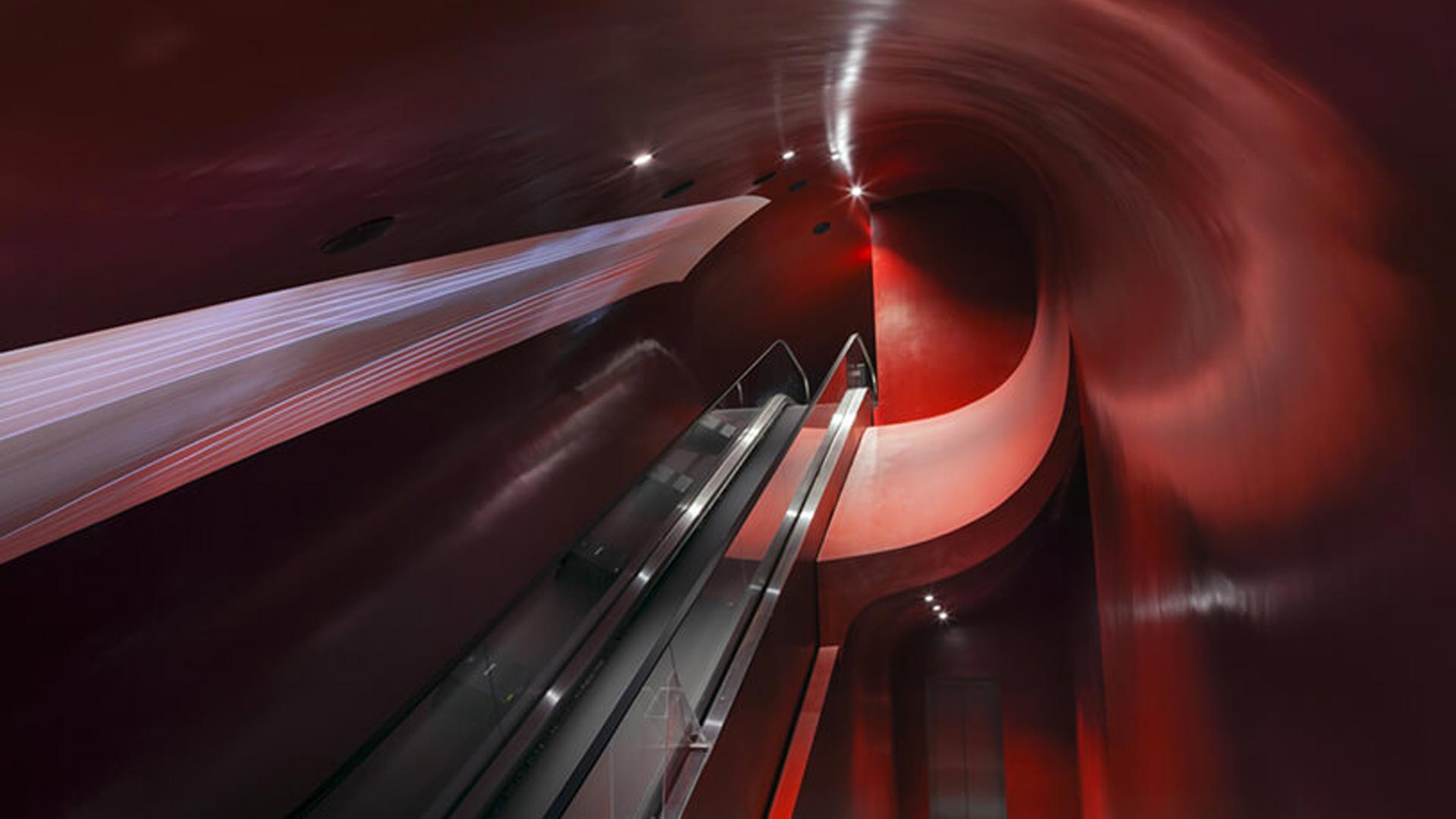
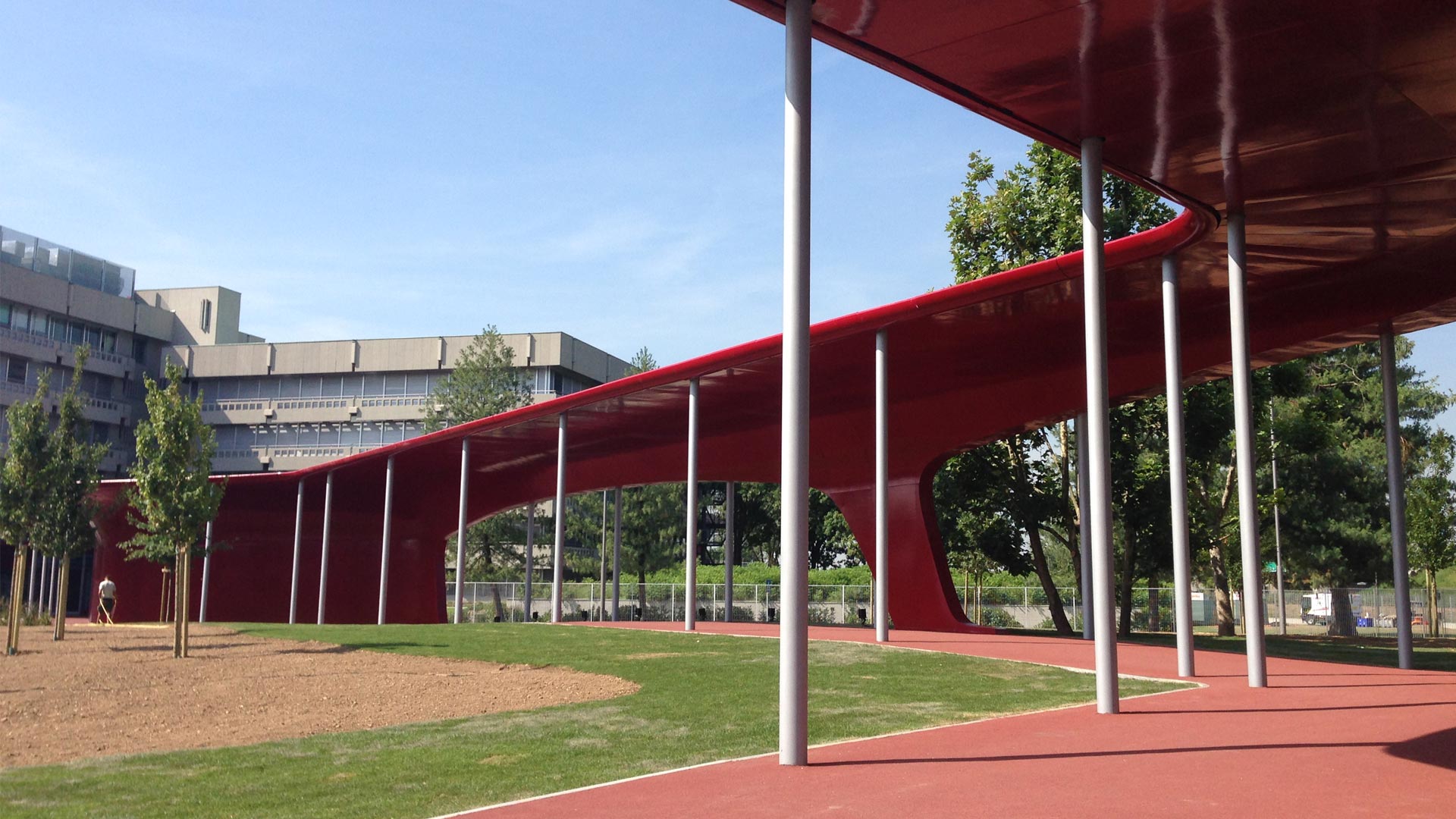
A symbol of the rebirth is the new northern entrance canopy, a kind of red fibreglass “biscione” (the snake, the Alfa Romeo emblem) that guides visitors from the car park first to the basement level at -1 beneath Building B, and then to the three-level exhibition route in Building E, accessed via a tunnel-ramp shaped like a giant rear-view mirror.
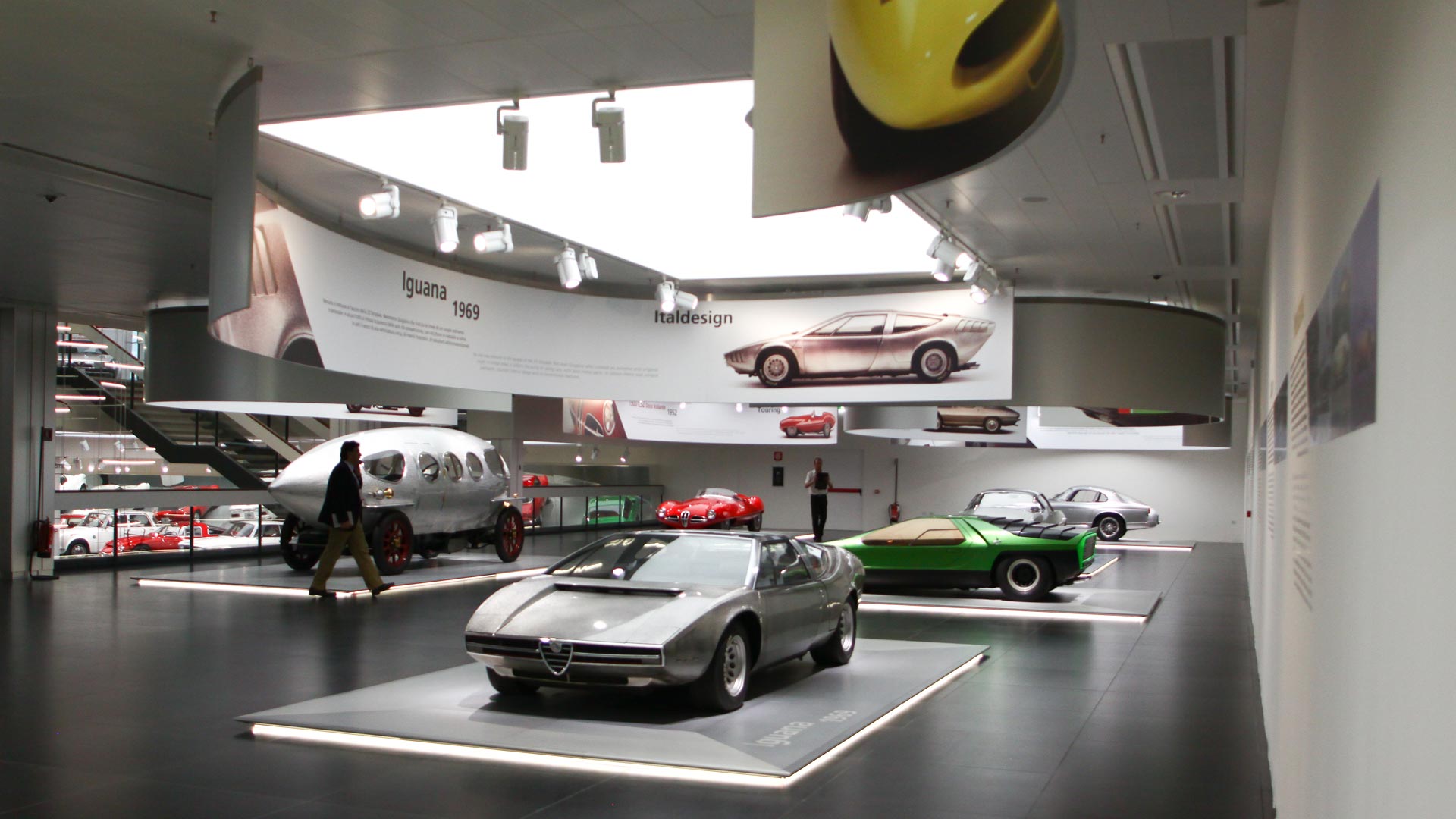
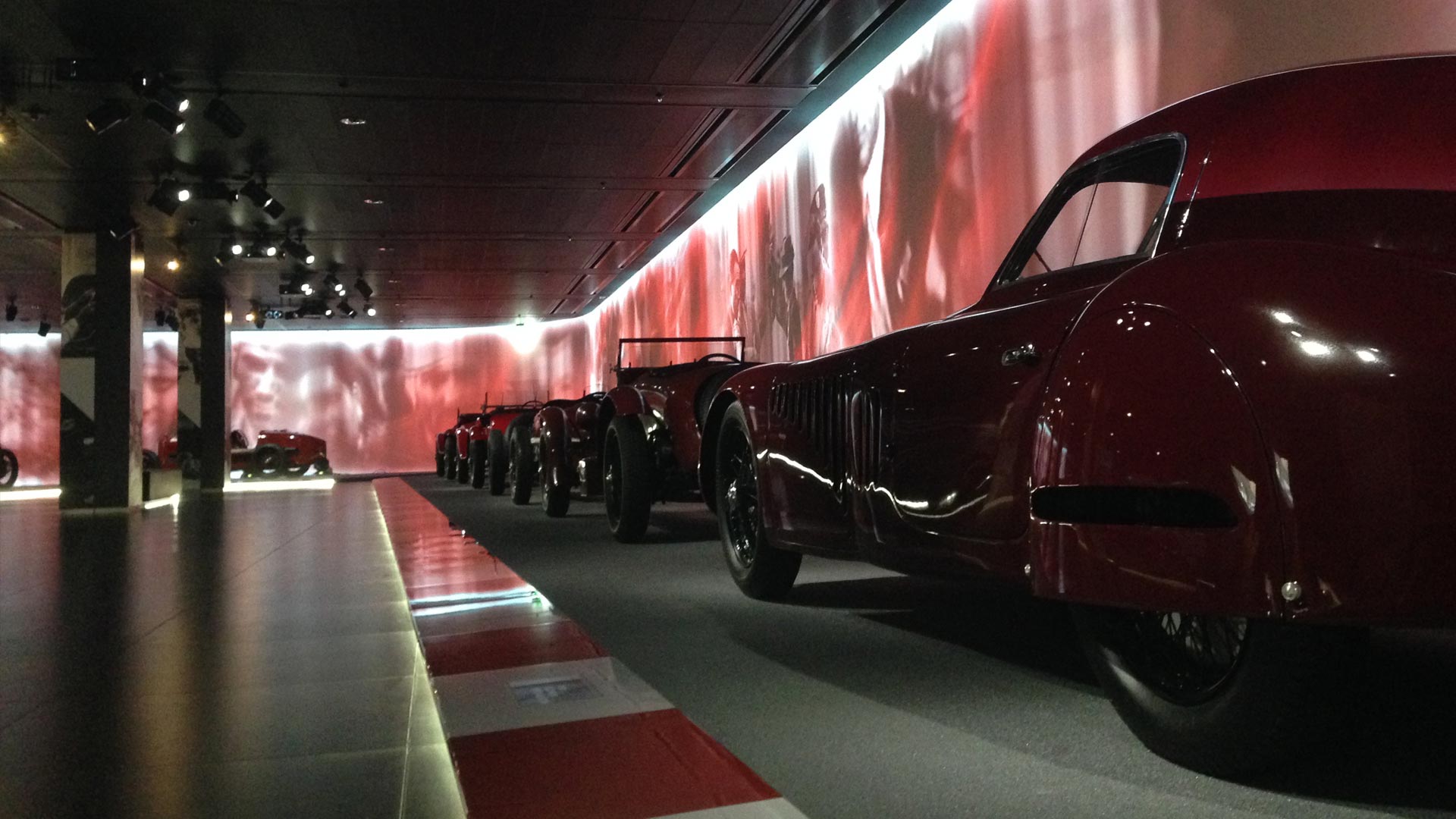
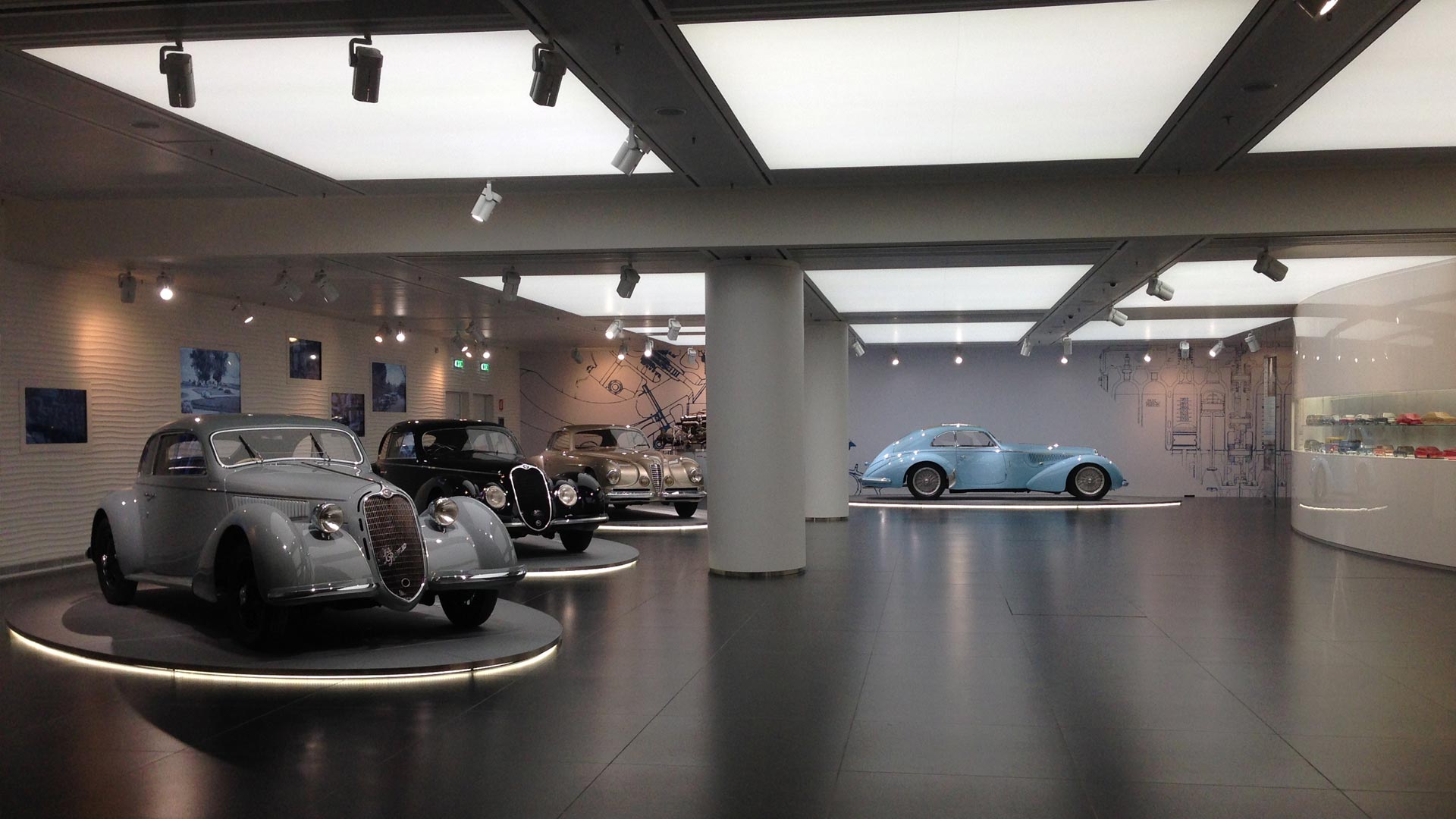
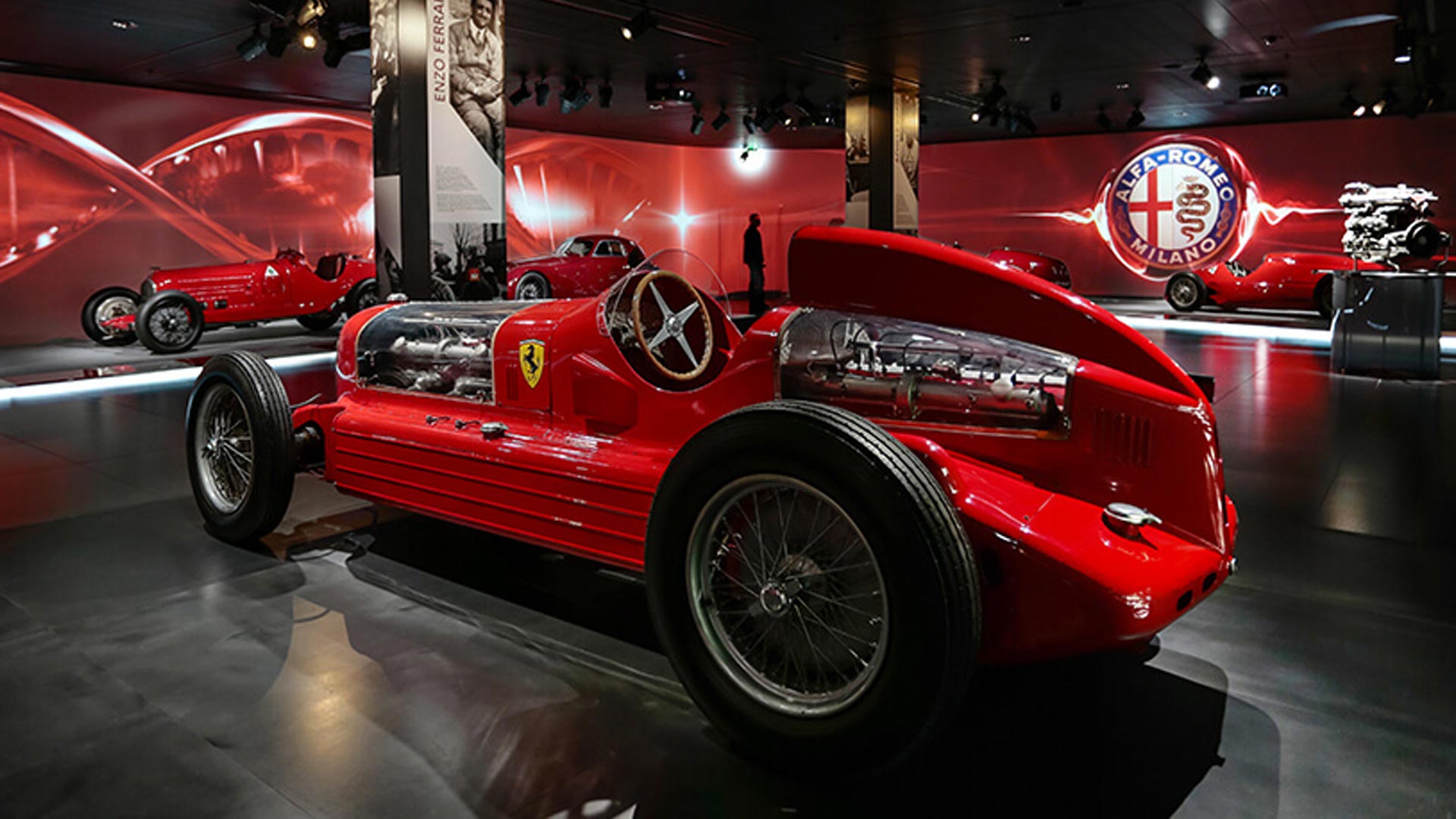
The museographic design retraces the evolution of the Alfa Romeo brand by distilling it into three core values: Timeline, representing industrial continuity, Beauty, and Speed. Along the descending route, 70 automotive masterpieces that have marked the history of the automobile are displayed, accompanied by multimedia installations that create an immersive visitor experience.
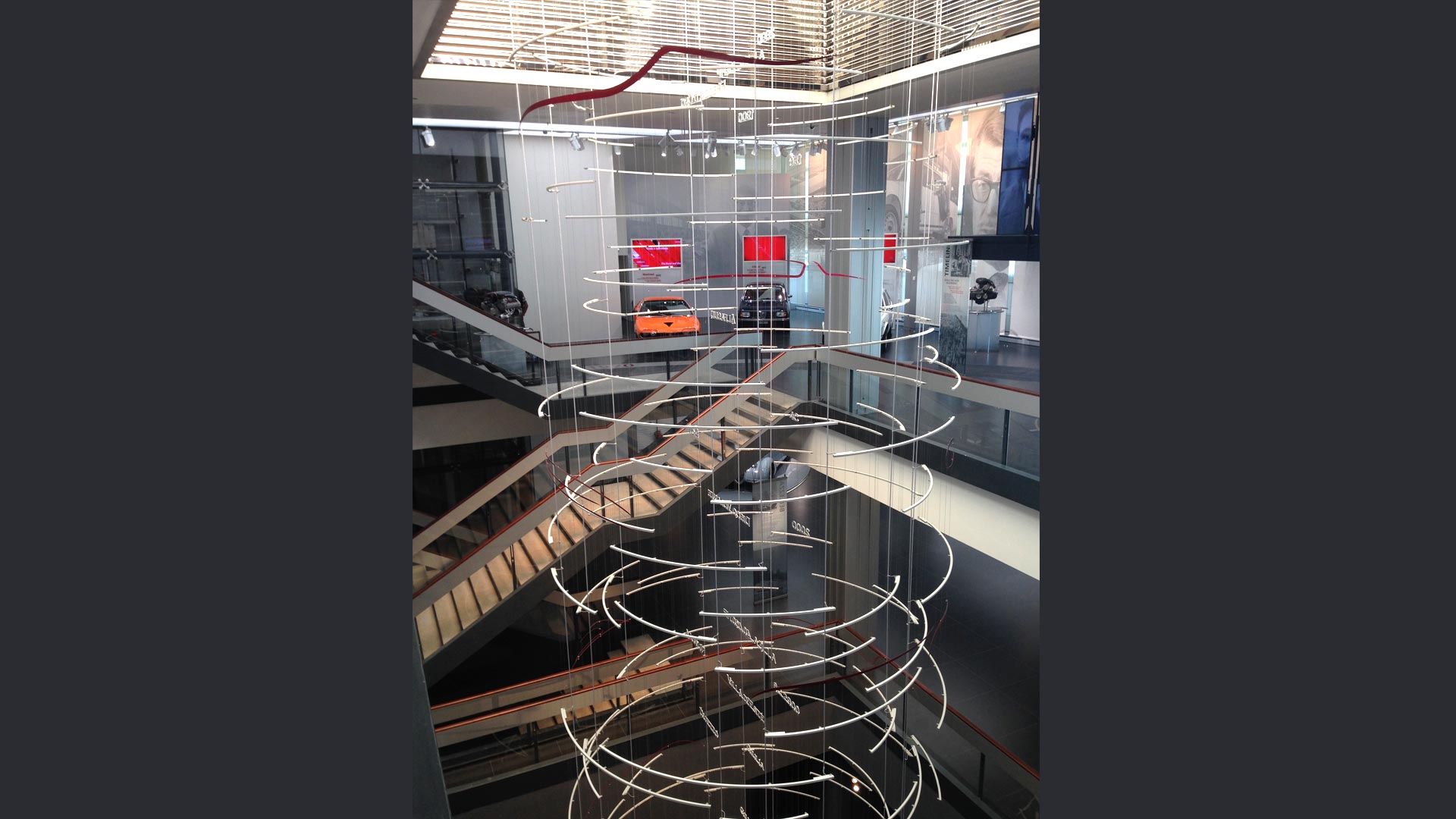
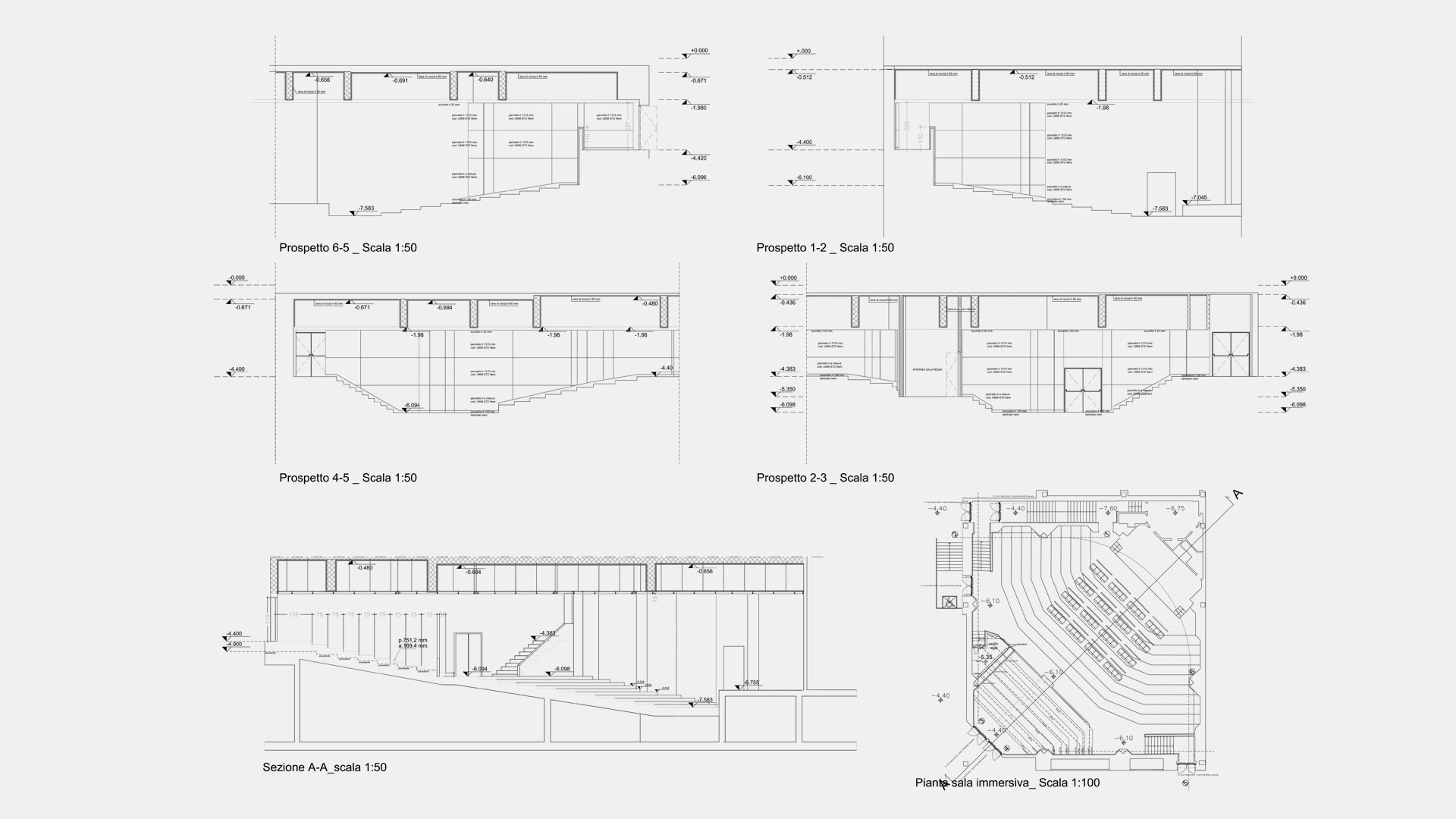
The journey into the myth concludes with a series of “emotional bubbles” featuring 360° virtual reality footage and a cinema room with interactive seating, where 4D films recount Alfa Romeo’s legendary achievements. The final spectacular element is the evocative lighting installation “DNA Alfa Romeo”, which runs vertically through the heart of the building: lights, words and stylistic symbols are activated in a descending helical movement, symbolising the brand’s stylistic continuity.
From headquarters complex to brand centre
The large complex built between 1967 and 1976 by architects Gustavo and Vito Latis consists of four multi-storey steel and reinforced concrete buildings, originally housing the headquarters offices (Buildings A, B and C) and the historic museum (Building E), plus two semi-underground blocks accommodating the canteen (Building F) and the historic car workshop (Building D). The ensemble is linked by a central plaza raised above ground level.
The regeneration of this substantial built heritage was entrusted to the Turin-based architectural practice Benedetto Camerana & Partners, supported by EP&S for engineering services, with the aim of transforming the site into a true brand centre. The new programme includes exhibition spaces integrated with a documentation centre, a multi-purpose hall, an Alfa and Jeep showroom, a historic car storage facility (the Scuderia del Portello), headquarters offices, a bar-restaurant, a test track and a collection area for newly purchased vehicles. The project focused on a functional and image-driven reorganisation of the complex, while retaining the existing structures due to the protection constraints imposed by the Superintendency of Archaeology, Fine Arts and Landscape on both the museum building and its contents, as well as on the historic archive.
A captivating exhibition itinerary
A symbol of the rebirth is the new northern entrance canopy, a kind of red fibreglass “biscione” (the snake, the Alfa Romeo emblem) that guides visitors from the car park first to the basement level at -1 beneath Building B, and then to the three-level exhibition route in Building E, accessed via a tunnel-ramp shaped like a giant rear-view mirror.
The museographic design retraces the evolution of the Alfa Romeo brand by distilling it into three core values: Timeline, representing industrial continuity, Beauty, and Speed. Along the descending route, 70 automotive masterpieces that have marked the history of the automobile are displayed, accompanied by multimedia installations that create an immersive visitor experience.
The journey into the myth concludes with a series of “emotional bubbles” featuring 360° virtual reality footage and a cinema room with interactive seating, where 4D films recount Alfa Romeo’s legendary achievements. The final spectacular element is the evocative lighting installation “DNA Alfa Romeo”, which runs vertically through the heart of the building: lights, words and stylistic symbols are activated in a descending helical movement, symbolising the brand’s stylistic continuity.
The main challenge: compressed timelines
The firm oversaw the construction, building and structural design of almost the entire complex (excluding Building C, which remained in use as offices), as well as the coordination of works, with a multidisciplinary team of eight professionals led by Andrea Ferraresi. The intervention involved Buildings A (housing the bar-restaurant), B (with the museum entrance at level -1 and offices above), E (the redesigned museum), and F (where the former canteen was converted into a multi-purpose hall).
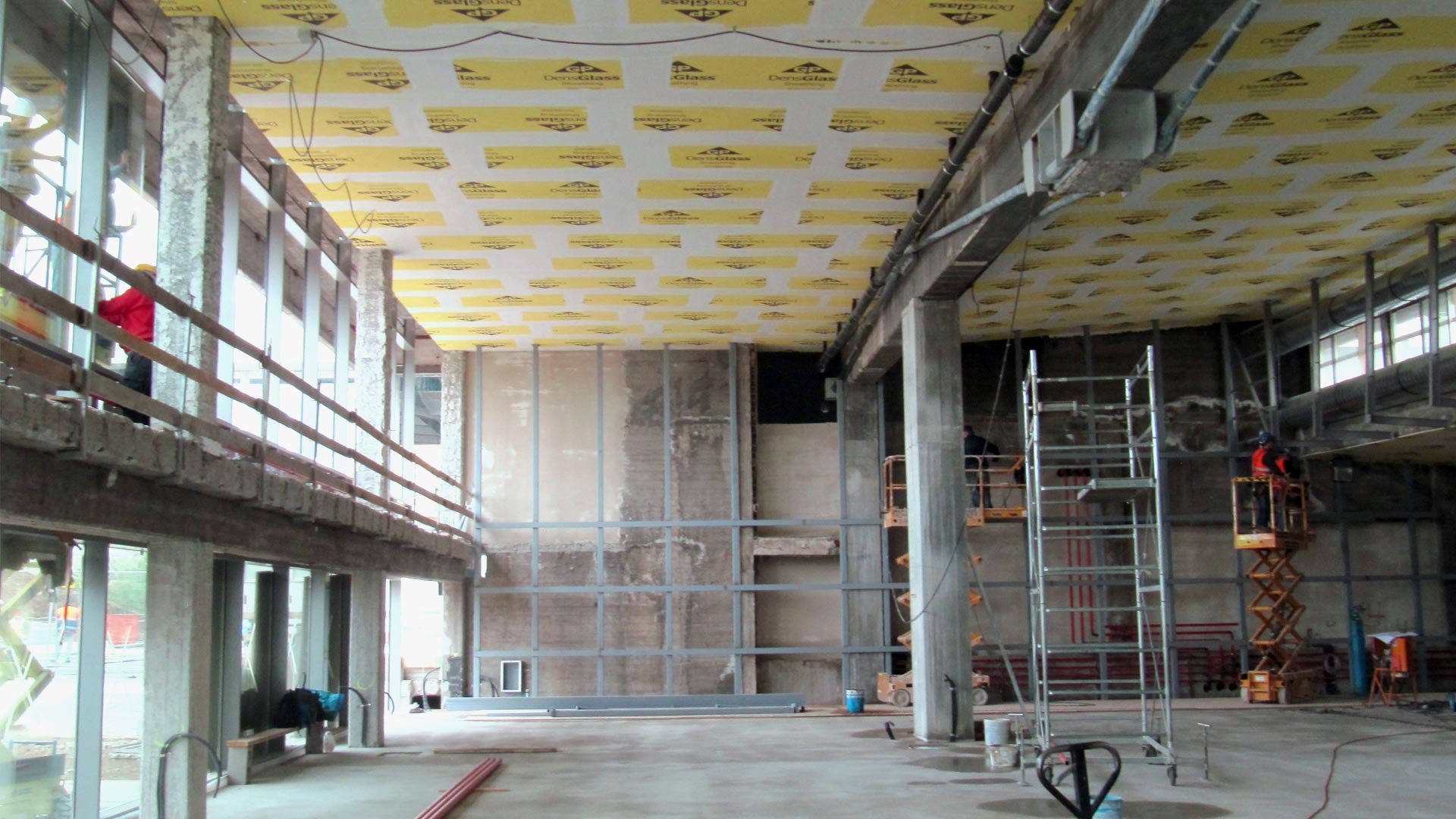
Time compression was one of the most significant challenges, as the new brand centre had to be inaugurated on 24 June 2015 for the world preview of the new Alfa Romeo Giulia, in the presence of CEO Marchionne and the highest state authorities. This goal was achieved thanks to the remarkable skill and cohesion of the workforce. The first three months were entirely devoted to stripping out existing fittings and carrying out remediation works. From January to June 2015, construction progressed at record speed on all fronts, employing up to 550 workers across multiple shifts.
Coordination across different scales
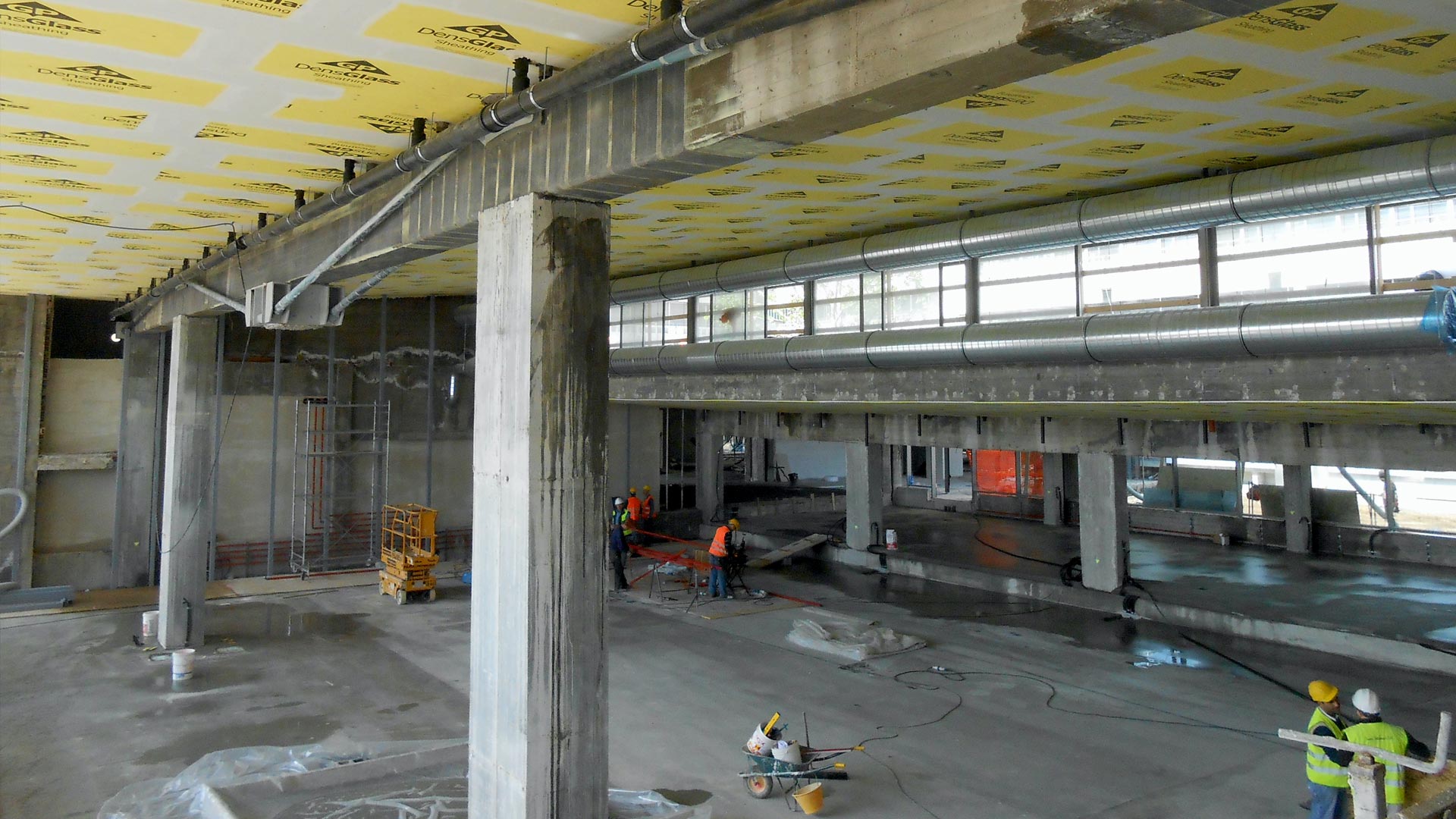
Studio A. Ferraresi – AF Engineering’s main focus was to establish effective coordination both with material and structural suppliers and with the contractor’s technical team, balancing workforce requirements with interventions across very different architectural, structural and building-services typologies: from the milling of MDF exhibition panels to external circulation works, from removing a central column – within the new multi-purpose hall – with a post-tensioned cable system, completed by the strengthening the foundations by injection to support the loads transferred by the remaining two columns.
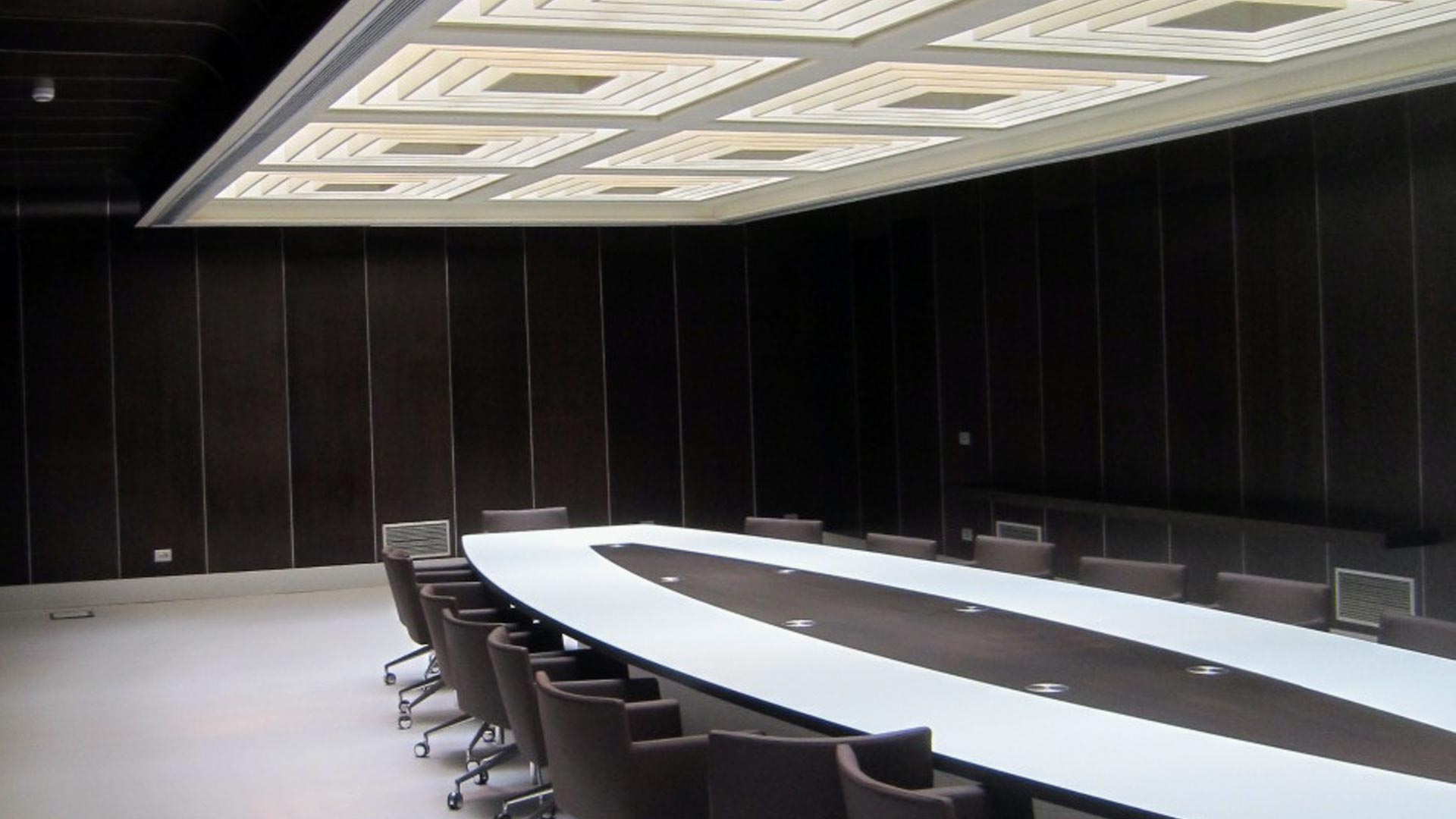
Considerable effort was also required for the technical design of several key detail, for instance: the immersive multimedia room beneath the central plaza, developed in collaboration with specialist amusement-park craftsmen; the upgrading of internal balustrades, which, since protected elements, had to be brought into compliance with current regulations without altering their form or materials; the suspended DNA-shaped installation, which required additional strengthening of the ceiling; the optimisation of the museum’s suspended ceilings, transformed into true technological and building-services “machines”.
The main challenge: compressed timelines
The firm oversaw the construction, building and structural design of almost the entire complex (excluding Building C, which remained in use as offices), as well as the coordination of works, with a multidisciplinary team of eight professionals led by Andrea Ferraresi. The intervention involved Buildings A (housing the bar-restaurant), B (with the museum entrance at level -1 and offices above), E (the redesigned museum), and F (where the former canteen was converted into a multi-purpose hall).
Time compression was one of the most significant challenges, as the new brand centre had to be inaugurated on 24 June 2015 for the world preview of the new Alfa Romeo Giulia, in the presence of CEO Marchionne and the highest state authorities. This goal was achieved thanks to the remarkable skill and cohesion of the workforce. The first three months were entirely devoted to stripping out existing fittings and carrying out remediation works. From January to June 2015, construction progressed at record speed on all fronts, employing up to 550 workers across multiple shifts.
Coordination across different scales
Studio A. Ferraresi – AF Engineering’s main focus was to establish effective coordination both with material and structural suppliers and with the contractor’s technical team, balancing workforce requirements with interventions across very different architectural, structural and building-services typologies: from the milling of MDF exhibition panels to external circulation works, from removing a central column – within the new multi-purpose hall – with a post-tensioned cable system, completed by the strengthening the foundations by injection to support the loads transferred by the remaining two columns.
Considerable effort was also required for the technical design of several key detail, for instance: the immersive multimedia room beneath the central plaza, developed in collaboration with specialist amusement-park craftsmen; the upgrading of internal balustrades, which, since protected elements, had to be brought into compliance with current regulations without altering their form or materials; the suspended DNA-shaped installation, which required additional strengthening of the ceiling; the optimisation of the museum’s suspended ceilings, transformed into true technological and building-services “machines”.
Project Highlights
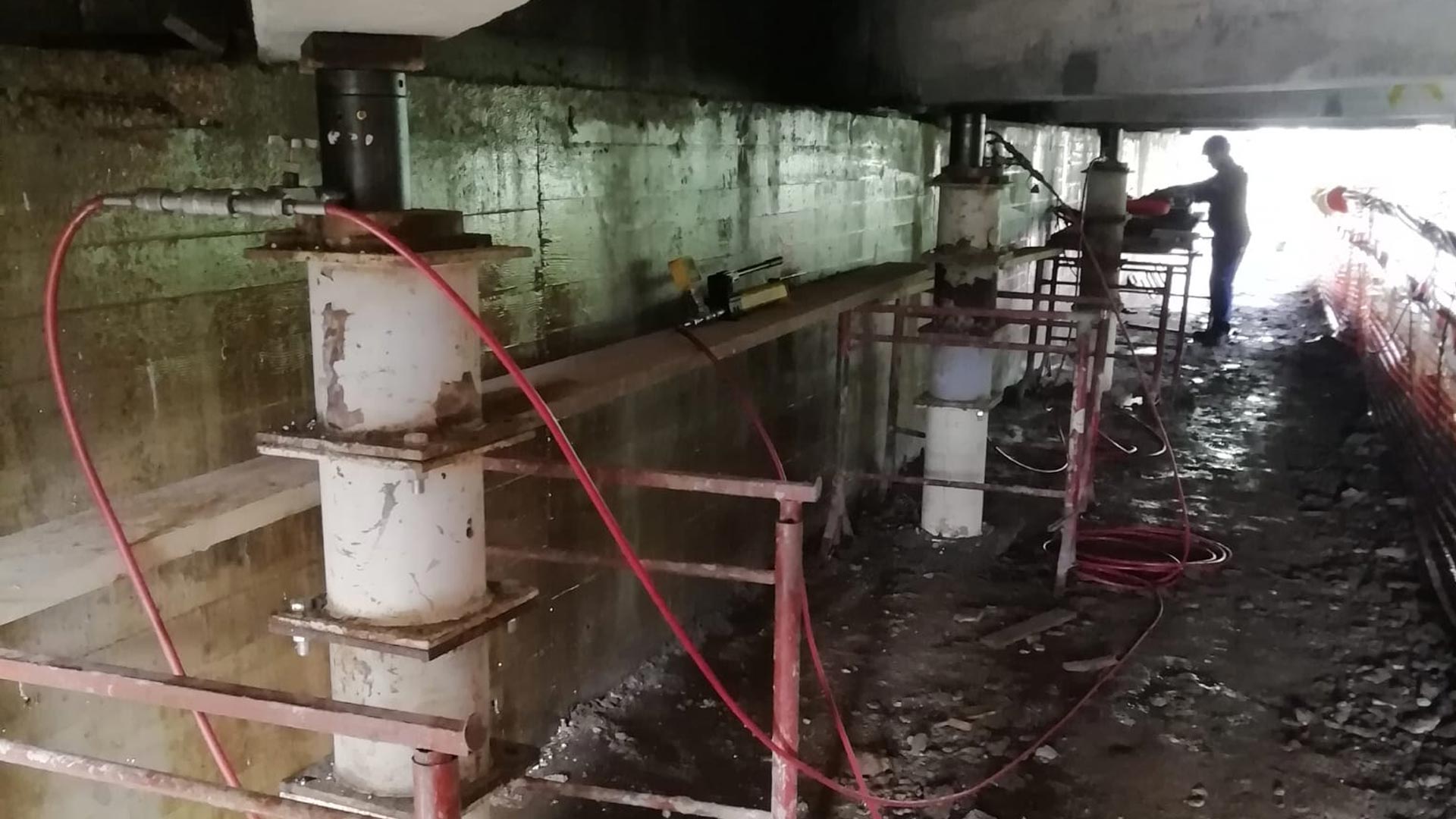
The success of this project led to numerous further commissions for Studio A. Ferraresi – AF Engineering from the FCA Group: the regeneration of the Agnelli Foundation in Turin, as well as additional works at the Arese site such as the construction design for extraordinary maintenance of Building C (2018), the refurbishment of façades and interiors of the adjacent plant; the regeneration of the upper floors in Buildings A and B (2019–2021); and the restoration of the bridge beams within the headquarters complex (carried out by Alessandro Ferraresi in 2023).