-
Redevelopment
of an office complex
on Via Cernaia -
Redevelopment
of an office complex
on Via Cernaia -
Redevelopment
of an office complex
on Via Cernaia
Renovation focused
on environmental quality
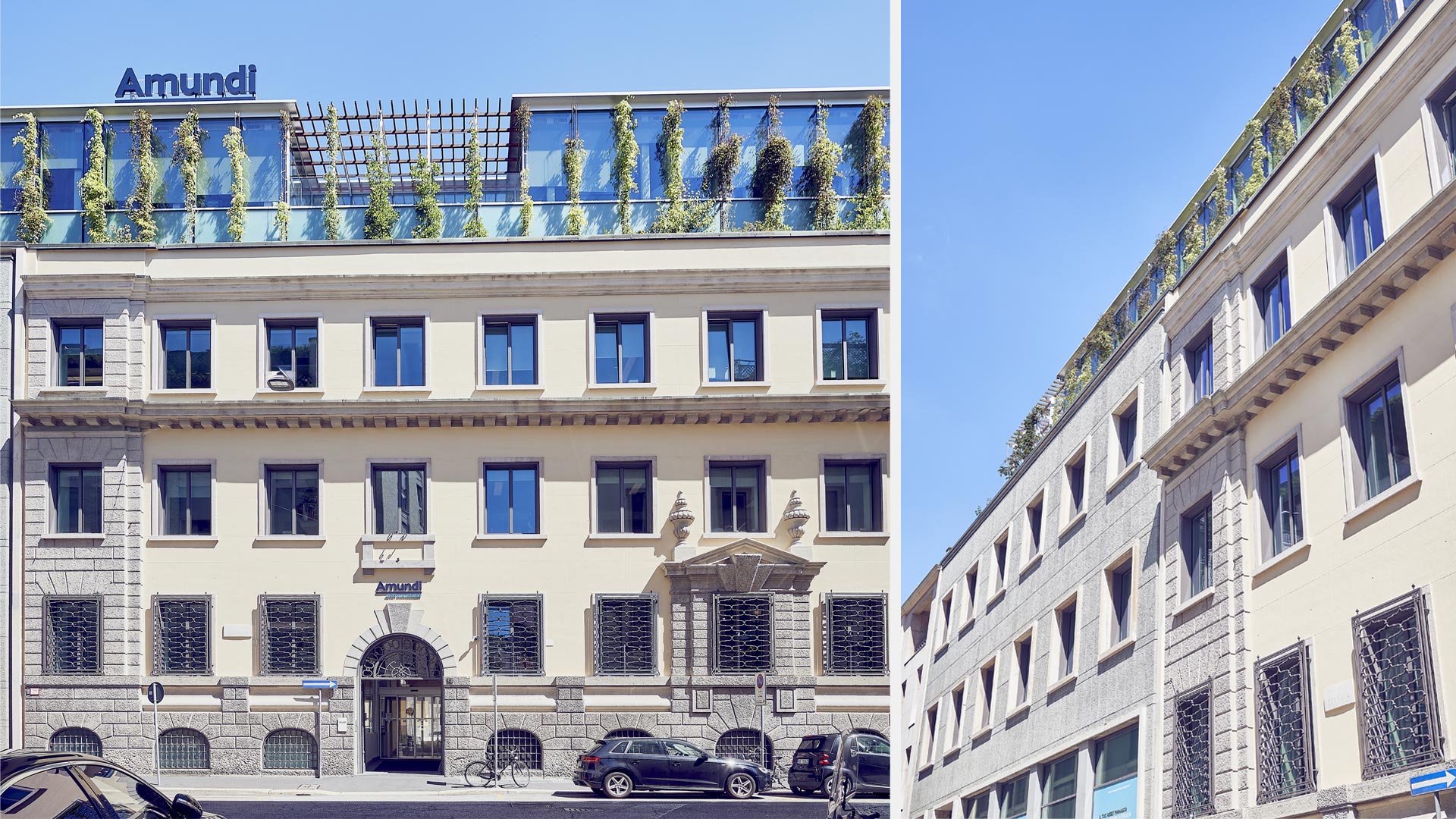
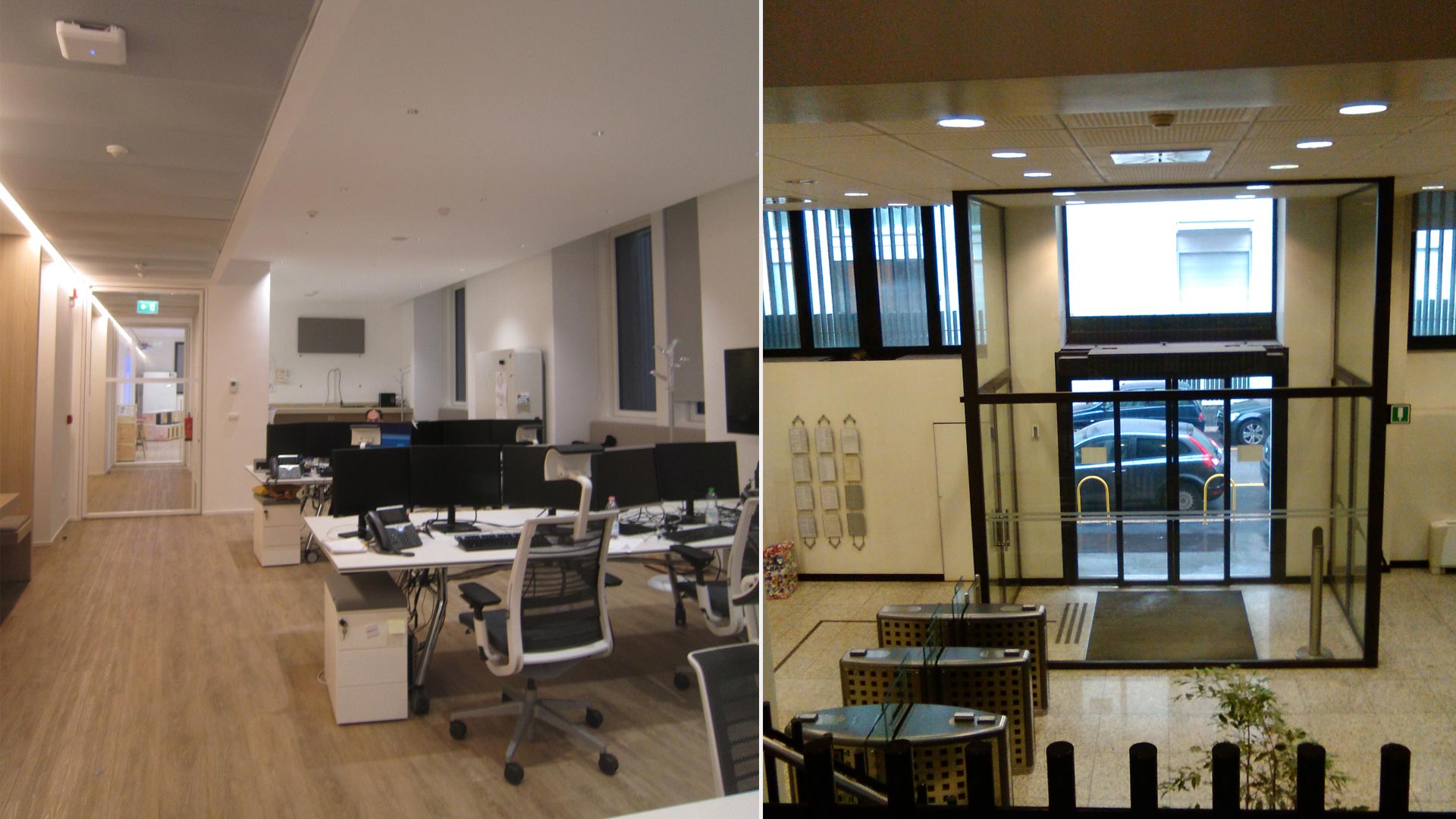
The complete restyling of two contiguous late-19th- and early-20th-century buildings located near Piazza San Marco involved a series of upgrades that significantly improved the liveability of the working environment within the complex.
Studio A. Ferraresi – AF Engineering was appointed to coordinate the municipal approval procedures, particularly demanding due to urban-planning and landscape constraints, and to provide high-level oversight of construction management.
-
Type:
Offices
-
Location:
Via Cernaia 9/11, Milan
-
Year:
2016-2018
-
Client:
Beni Stabili SIIQ SpA
-
Budget:
€9 million
-
Type:
Offices
-
Location:
Via Cernaia 9/11, Milan
-
Year:
2016-2018
-
Services provided (Andrea Ferraresi):
- Coordination Building Permits/Planning Permissions Approval
- Formal Construction Management (high-level oversight)
-
Architectural design:
Arch. Carlo Masera (Architectural and Landscape Design, Artistic Direction), Sm*S (Architectural and Interior Design), Eng. Andrea Ferraresi (Administrative Architectural Design)
-
Client:
Beni Stabili SIIQ SpA
-
Gross floor area:
8,000 sq m
-
Budget:
€9 million
Courtesy Costruzioni Generali Gilardi
Project Features
Prestigious location in the city centre
Behind the historic Via San Marco, on the edge of the attractive Brera district, lies Via Cernaia, a street rebuilt between WWI and WWII with several authored residential buildings and characterized, in its central stretch, by an interesting complex of office buildings. The two adjacent buildings, dating respectively from the mid-19th century and the 1930s, were originally owned by a bank, which had already carried out a first renovation in the 1960s and 1970s.
In more recent years, the entire complex was acquired by Beni Stabili, which decided to undertake a major restyling aimed at accommodating Amundi as tenant, an international investment company particularly attentive to environmental sustainability and the healthiness of workplaces.
Prestigious location in the city centre
Behind the historic Via San Marco, on the edge of the attractive Brera district, lies Via Cernaia, a street rebuilt between WWI and WWII with several authored residential buildings and characterized, in its central stretch, by an interesting complex of office buildings. The two adjacent buildings, dating respectively from the mid-19th century and the 1930s, were originally owned by a bank, which had already carried out a first renovation in the 1960s and 1970s.
In more recent years, the entire complex was acquired by Beni Stabili, which decided to undertake a major restyling aimed at accommodating Amundi as tenant, an international investment company particularly attentive to environmental sustainability and the healthiness of workplaces.
A carefully calibrated redevelopment
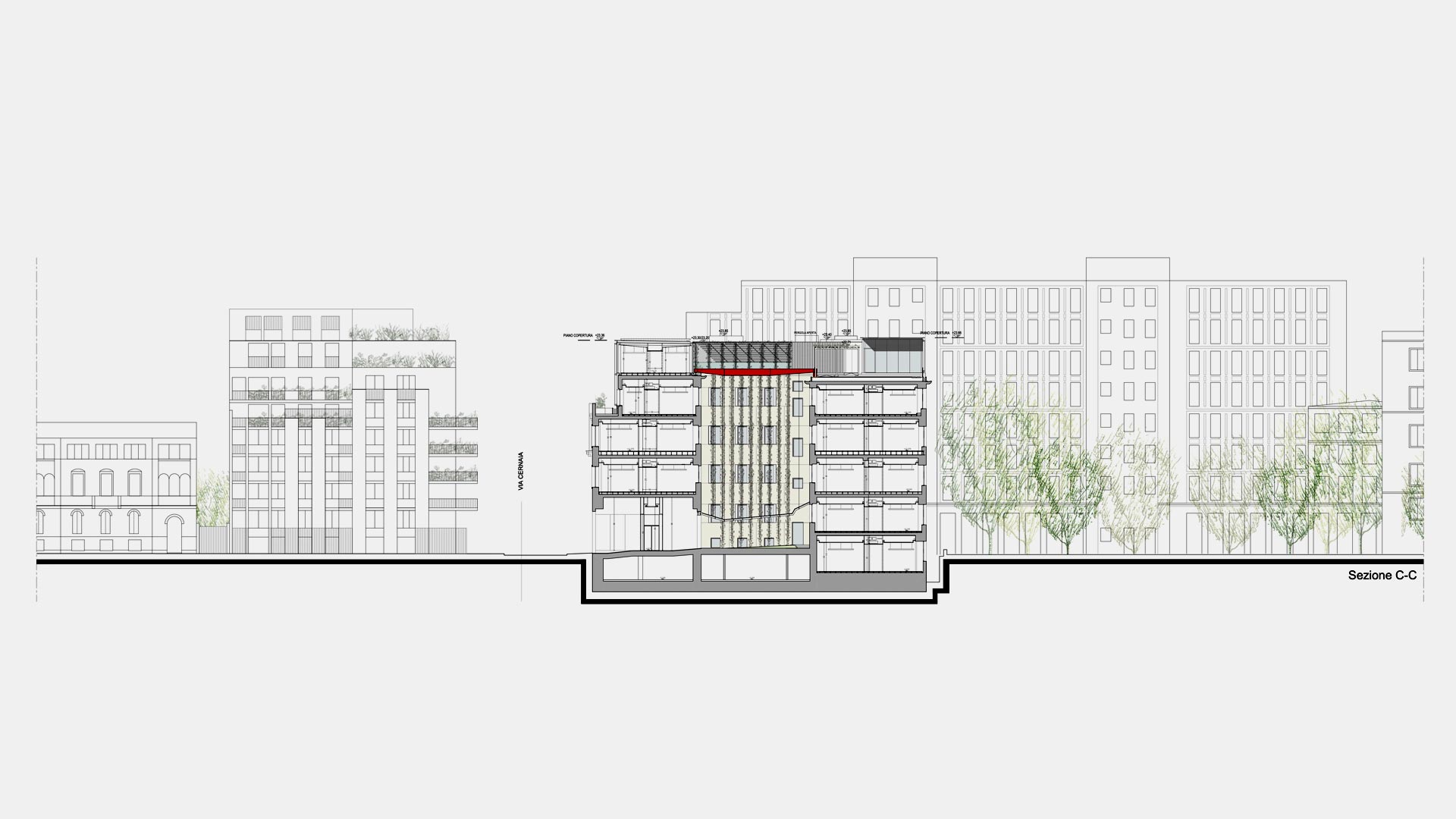
The intervention, designed by Beni Stabili and architect Carlo Masera, who was primarily responsible for the landscape design and artistic direction, focused on the refurbishment of the façades and on a strong integration with greenery. This element is a defining feature of the new glazed vertical extension, which unifies two stylistically very different buildings.
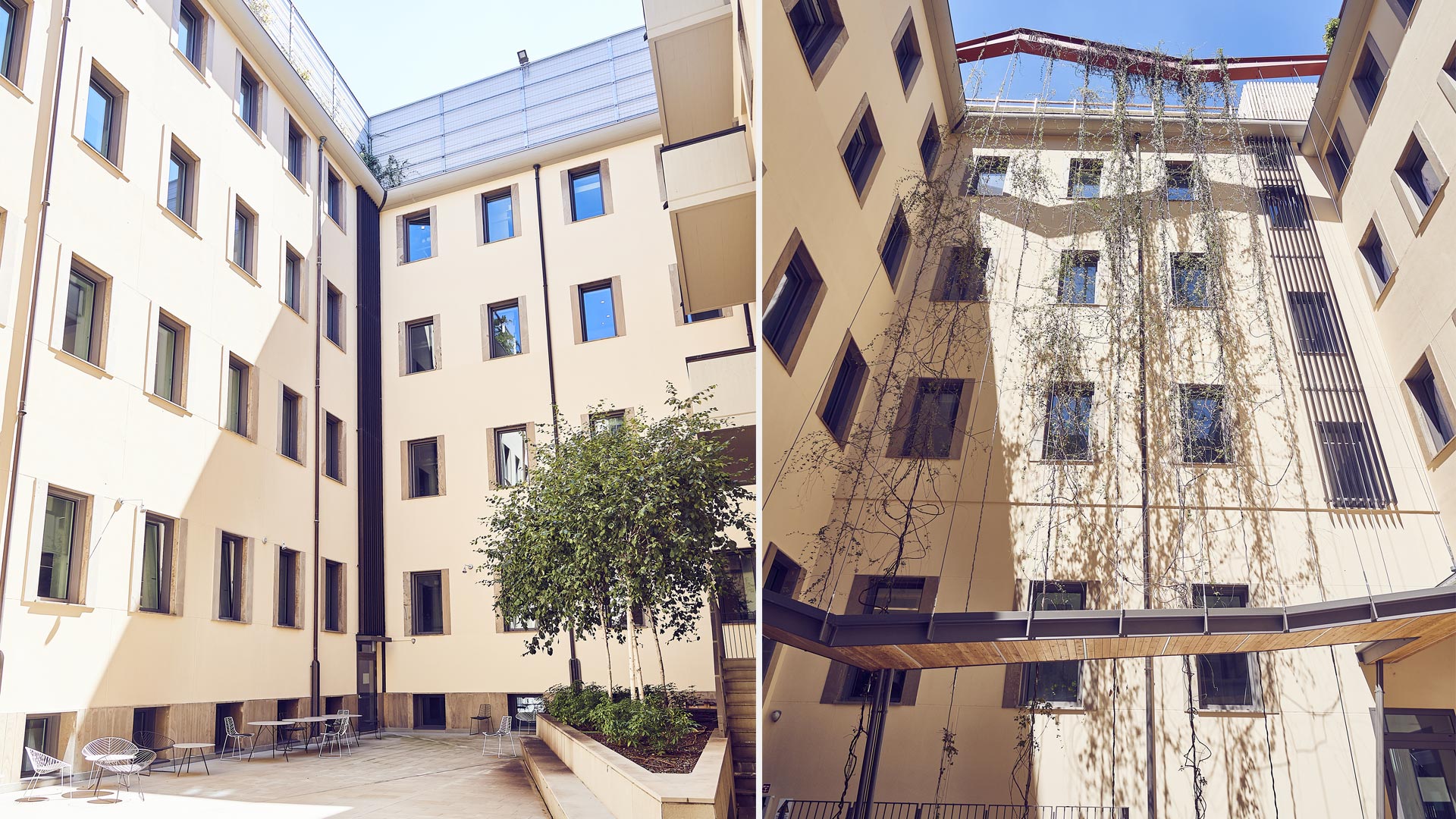
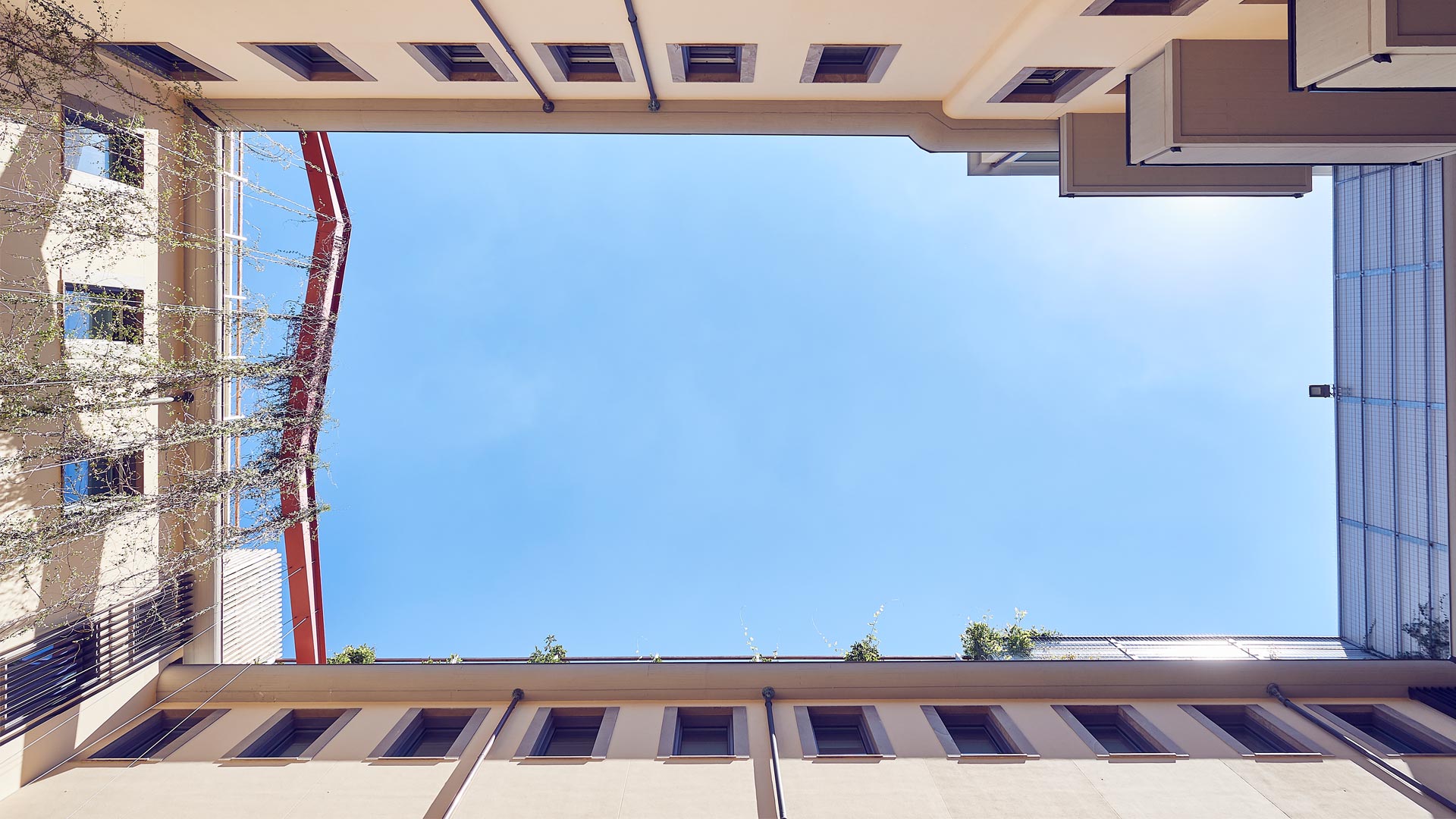
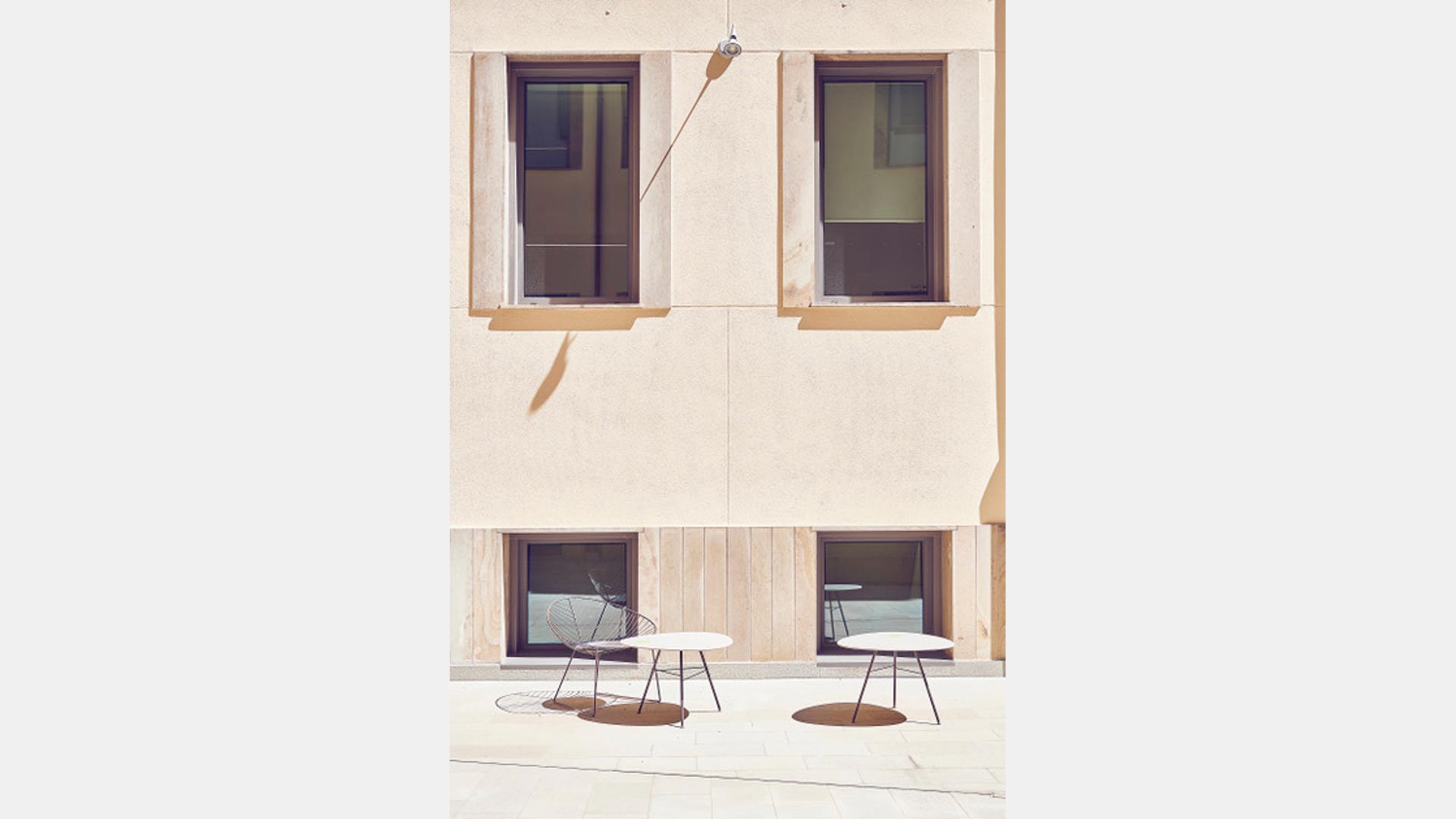
The redevelopment of the courtyards was also particularly successful, featuring canopies, seating areas and a large shaped and coloured steel beam supporting two rows of metal ties to which climbing plants are attached along their full height.
The glazed volumes on the third floor resulting from the vertical extension – enhanced with pergolas, climbing plants and small lawn areas facing the courtyard – accommodate spaces dedicated to teamwork, relaxation and fitness. The selection of plant species on the roof and along the internal façades was guided by the goal of promoting the psychophysical wellbeing of employees, a priority value for the new tenant. Their effect is to visually lighten the massive façades of the complex, resulting in a well-balanced intervention that resonates with contemporary sensibilities.
Urban planning and landscape constraints
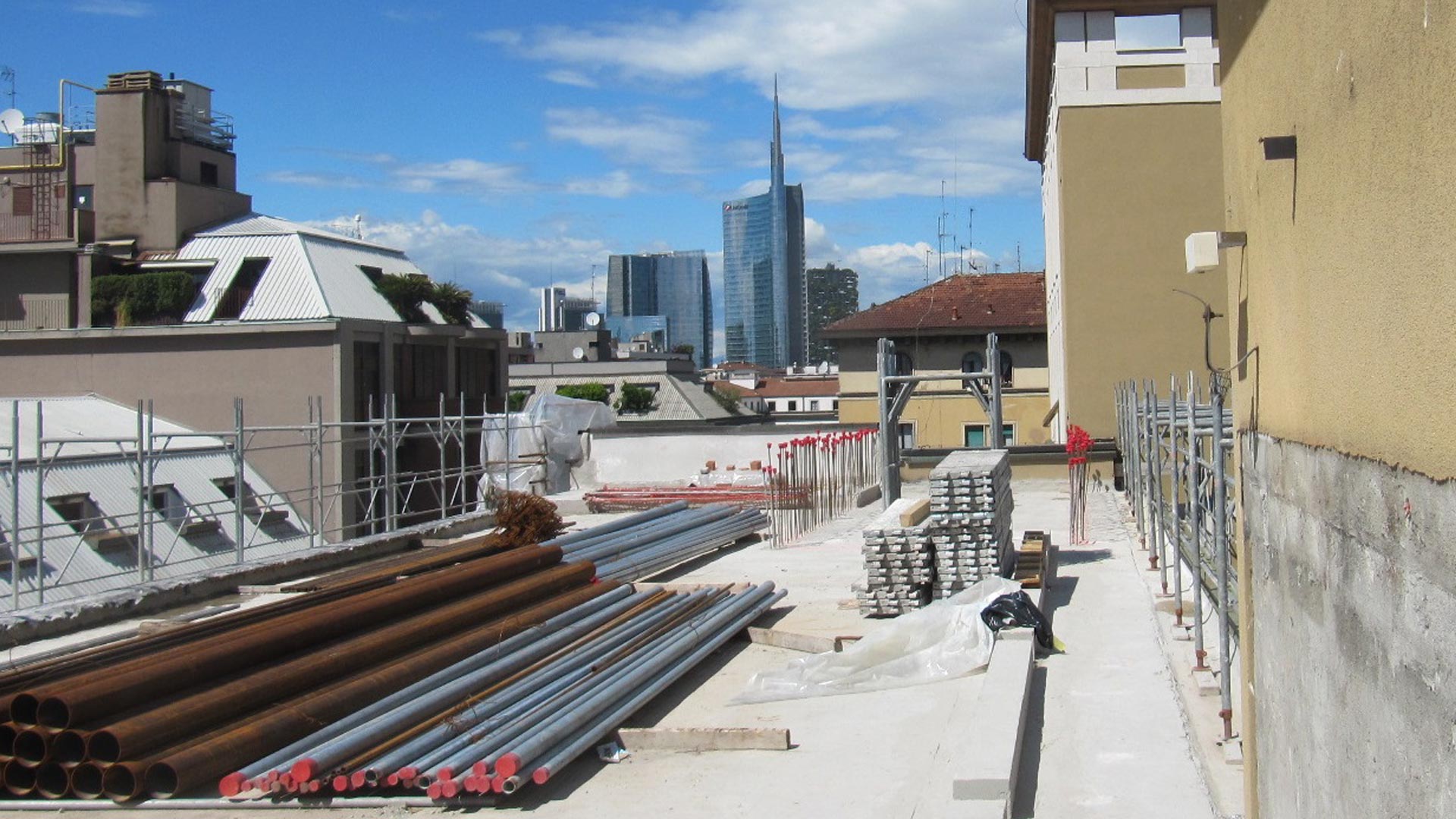
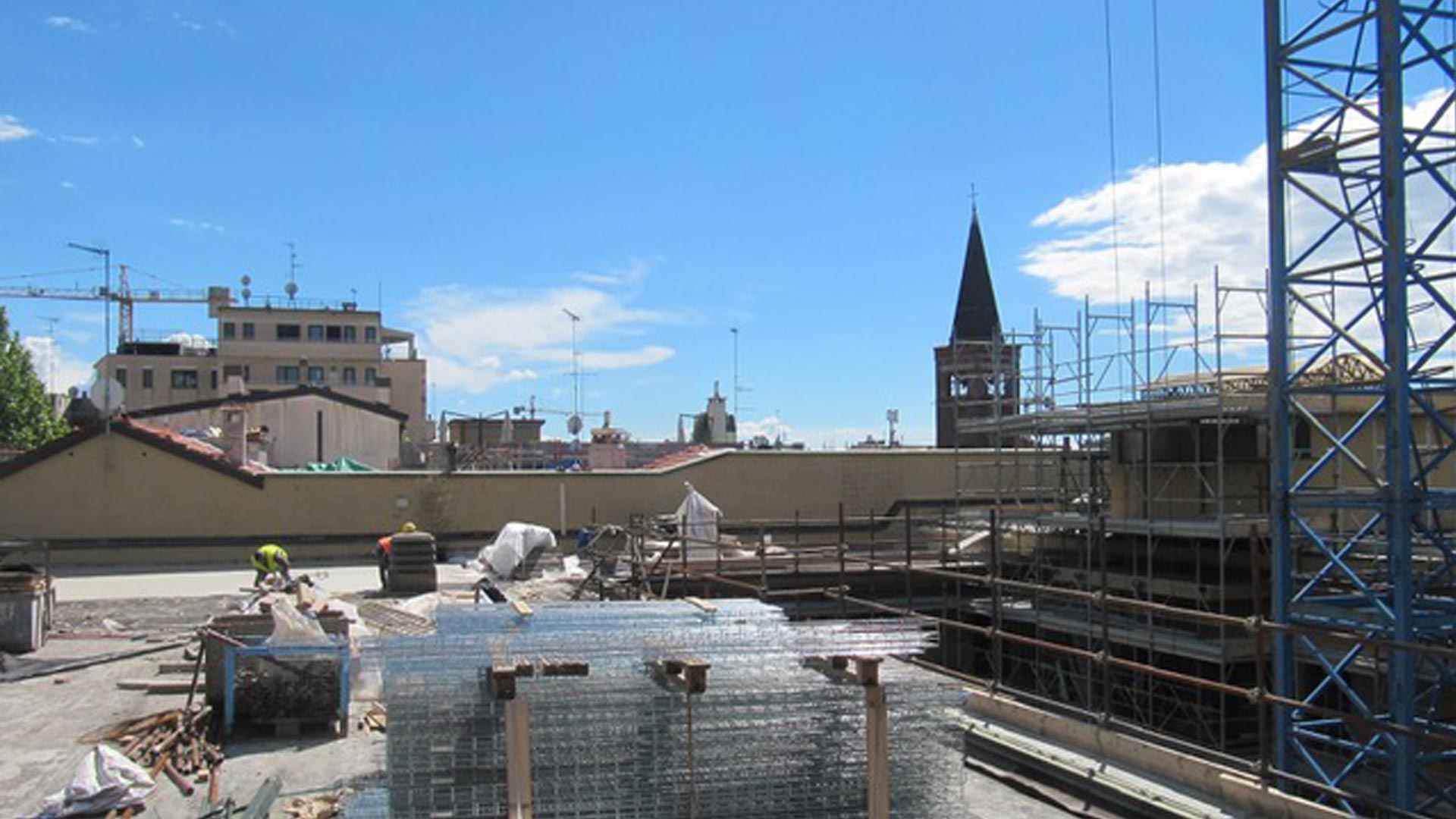
Studio A. Ferraresi – AF Engineering was involved in the project from the beginning, coordinating the municipal administrative and landscape approval procedures and providing high-level oversight of construction management. This was a quantitatively significant intervention whose scope evolved over time, shifting from a simple strip-out to a complex operation involving façade redesign, a vertical extension and multiple courtyard interventions.
The bureaucratic and formal aspects required considerable effort from Andrea Ferraresi and his team due to the complexity of urban-planning and landscape constraints and the need to balance the maximum achievable increase in usable floor area with Milan’s stringent regulations governing façades and courtyards. The assessment stage by the municipal authorities of the landscape and administrative issues proved particularly articulated, following resistance and difficulties related to the proposed vertical extension, which were ultimately fully resolved thanks to the firm’s expert consultancy. Additional effort was also required for the bureaucratic procedures related to the settlement of the tenant Amundi.
Energy efficiency and environmental well-being
With regard to high-level construction management, the areas requiring the greatest degree of control by Studio A. Ferraresi – AF Engineering were the seismic upgrading of the existing structures due to the addition of the vertical extension, and the proper execution of the new structures themselves. Also noteworthy are the mechanical and electrical systems of the building, for which conventional solutions were adopted but with particular attention paid to controlling the CO₂ footprint – thus placing an early and forward-looking emphasis on reducing energy consumption and improving the healthiness of work environments. Finally, the logistical effort required for the construction site should not be overlooked: the site was set up along a narrow, uniformly sectioned street and required specific measures to avoid obstructing traffic.
A carefully calibrated redevelopment
The intervention, designed by Beni Stabili and architect Carlo Masera, who was primarily responsible for the landscape design and artistic direction, focused on the refurbishment of the façades and on a strong integration with greenery. This element is a defining feature of the new glazed vertical extension, which unifies two stylistically very different buildings.
The redevelopment of the courtyards was also particularly successful, featuring canopies, seating areas and a large shaped and coloured steel beam supporting two rows of metal ties to which climbing plants are attached along their full height.
The glazed volumes on the third floor resulting from the vertical extension – enhanced with pergolas, climbing plants and small lawn areas facing the courtyard – accommodate spaces dedicated to teamwork, relaxation and fitness. The selection of plant species on the roof and along the internal façades was guided by the goal of promoting the psychophysical wellbeing of employees, a priority value for the new tenant. Their effect is to visually lighten the massive façades of the complex, resulting in a well-balanced intervention that resonates with contemporary sensibilities.
Urban planning and landscape constraints
Studio A. Ferraresi – AF Engineering was involved in the project from the beginning, coordinating the municipal administrative and landscape approval procedures and providing high-level oversight of construction management. This was a quantitatively significant intervention whose scope evolved over time, shifting from a simple strip-out to a complex operation involving façade redesign, a vertical extension and multiple courtyard interventions.
The bureaucratic and formal aspects required considerable effort from Andrea Ferraresi and his team due to the complexity of urban-planning and landscape constraints and the need to balance the maximum achievable increase in usable floor area with Milan’s stringent regulations governing façades and courtyards. The assessment stage by the municipal authorities of the landscape and administrative issues proved particularly articulated, following resistance and difficulties related to the proposed vertical extension, which were ultimately fully resolved thanks to the firm’s expert consultancy. Additional effort was also required for the bureaucratic procedures related to the settlement of the tenant Amundi.
Energy efficiency and environmental well-being
With regard to high-level construction management, the areas requiring the greatest degree of control by Studio A. Ferraresi – AF Engineering were the seismic upgrading of the existing structures due to the addition of the vertical extension, and the proper execution of the new structures themselves. Also noteworthy are the mechanical and electrical systems of the building, for which conventional solutions were adopted but with particular attention paid to controlling the CO₂ footprint – thus placing an early and forward-looking emphasis on reducing energy consumption and improving the healthiness of work environments. Finally, the logistical effort required for the construction site should not be overlooked: the site was set up along a narrow, uniformly sectioned street and required specific measures to avoid obstructing traffic.
Project Highlights
This was a dynamic project that evolved over time and required a strong ability to mediate on the part of Studio A. Ferraresi – AF Engineering, balancing the client’s non-standard requirements, the complex procedures of the municipal offices, and the work of no fewer than three architects who succeeded one another over the course of the project.