-
Redevelopment
of Torri Garibaldi
Complex -
Redevelopment
of Torri Garibaldi
Complex -
Redevelopment
of Torri Garibaldi
Complex
Challenging restyling
of a sustainable complex
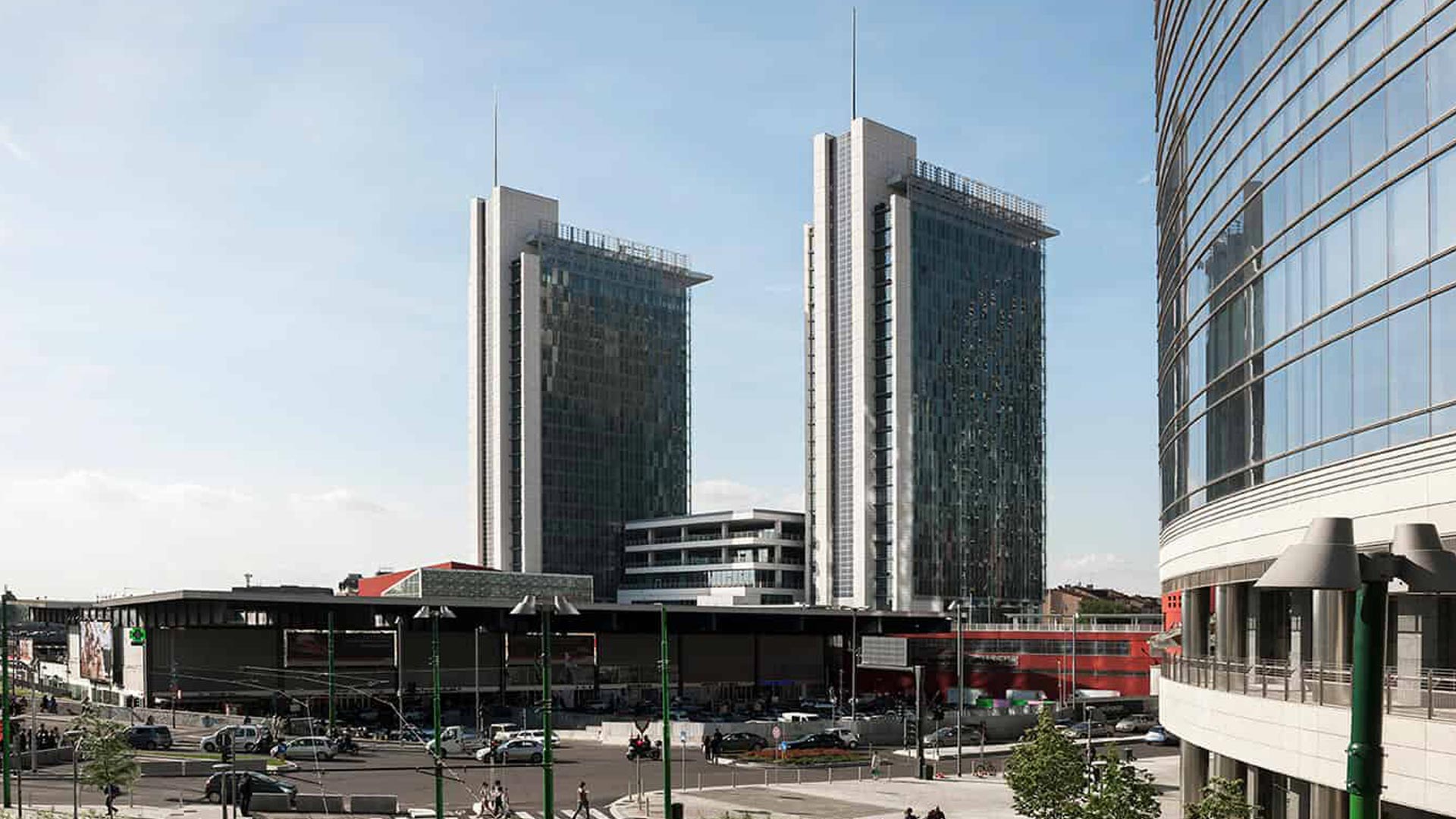
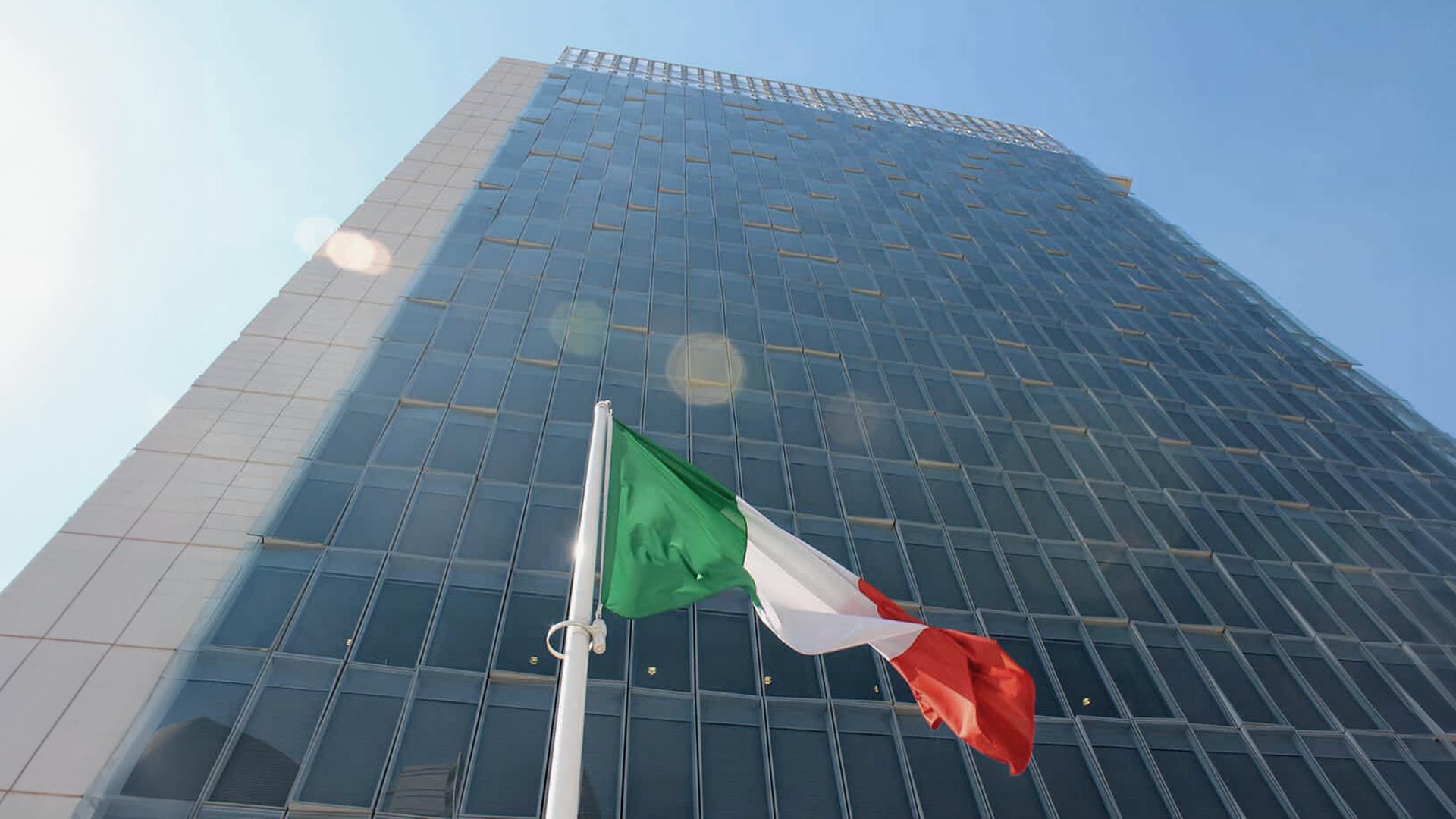
The two 25-storey office towers rising above the tracks of Garibaldi Station were built between the 1980s and 1990s for the Italian State Railways. They were later sold to a new owner, Beni Stabili, which from 2008 began their restyling starting with the east tower.
Studio A. Ferraresi – AF Engineering was brought in to take on the Construction Management for the redevelopment of the west tower and the demolition and reconstruction of the service buildings between the two skyscrapers.
-
Type:Offices
-
Location:
Piazza Sigmund Freud, Milan
-
Year:2011-2012
-
Client:
Beni Stabili SIIQ SpA
-
Budget:
€40 millio
-
Type:Offices
-
Location:
Piazza Sigmund Freud, Milan
-
Year:2011-2012
-
Services provided (Andrea Ferraresi):
- Construction Management (Clerk of Works) for the west tower and connecting structures
- Support to the client for validation of the contractor’s design
-
Client:
Beni Stabili SIIQ SpA
-
Architectural design:
Progetto CMR
-
Contractor:
Maltauro
-
Gross floor area:
32,000 sq m
-
Budget:
€40 million
Ph. Arturo Giorza
Project Features
Sustainable architecture
The two nearly identical 100-metre-high buildings, designed by architects Laura Lazzari and Giancarlo Perotta, partly rest on a parking slab and partly on the structures and tunnels of Garibaldi railway station. They were originally a symbol – sometimes criticized – of postmodern Milanese architecture.
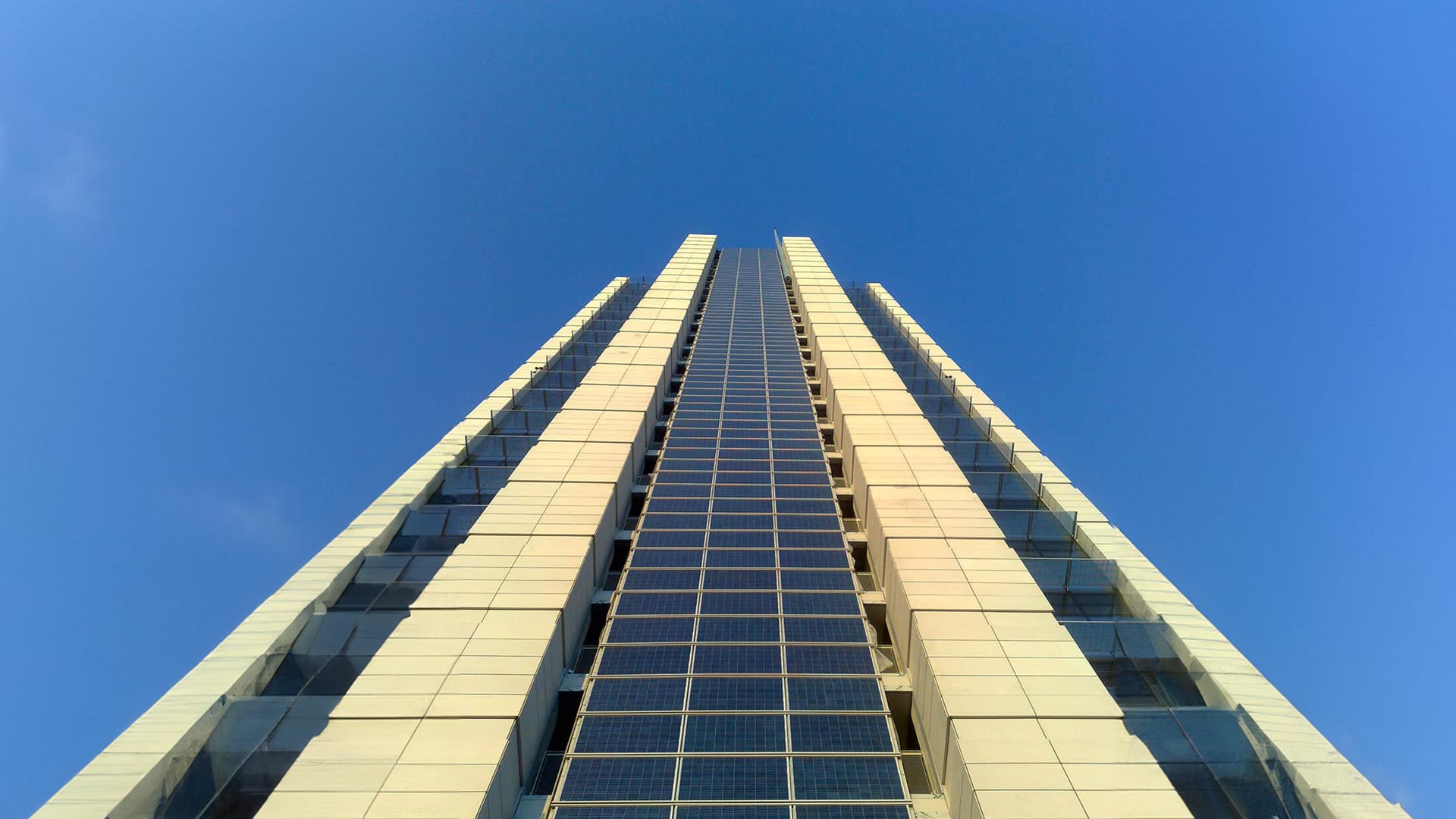
The redevelopment, designed by architect Massimo Roj of Progetto CMR, had the dual objective of renewing their image and transforming them into sustainable architecture that was among Italy’s most advanced at the time. The exteriors were completely redesigned and equipped with continuous vertical bands of photovoltaic panels, natural ventilation systems, interactive façades and bioclimatic greenhouses on every floor, resulting in a zero-emission complex.
A skin with an original design
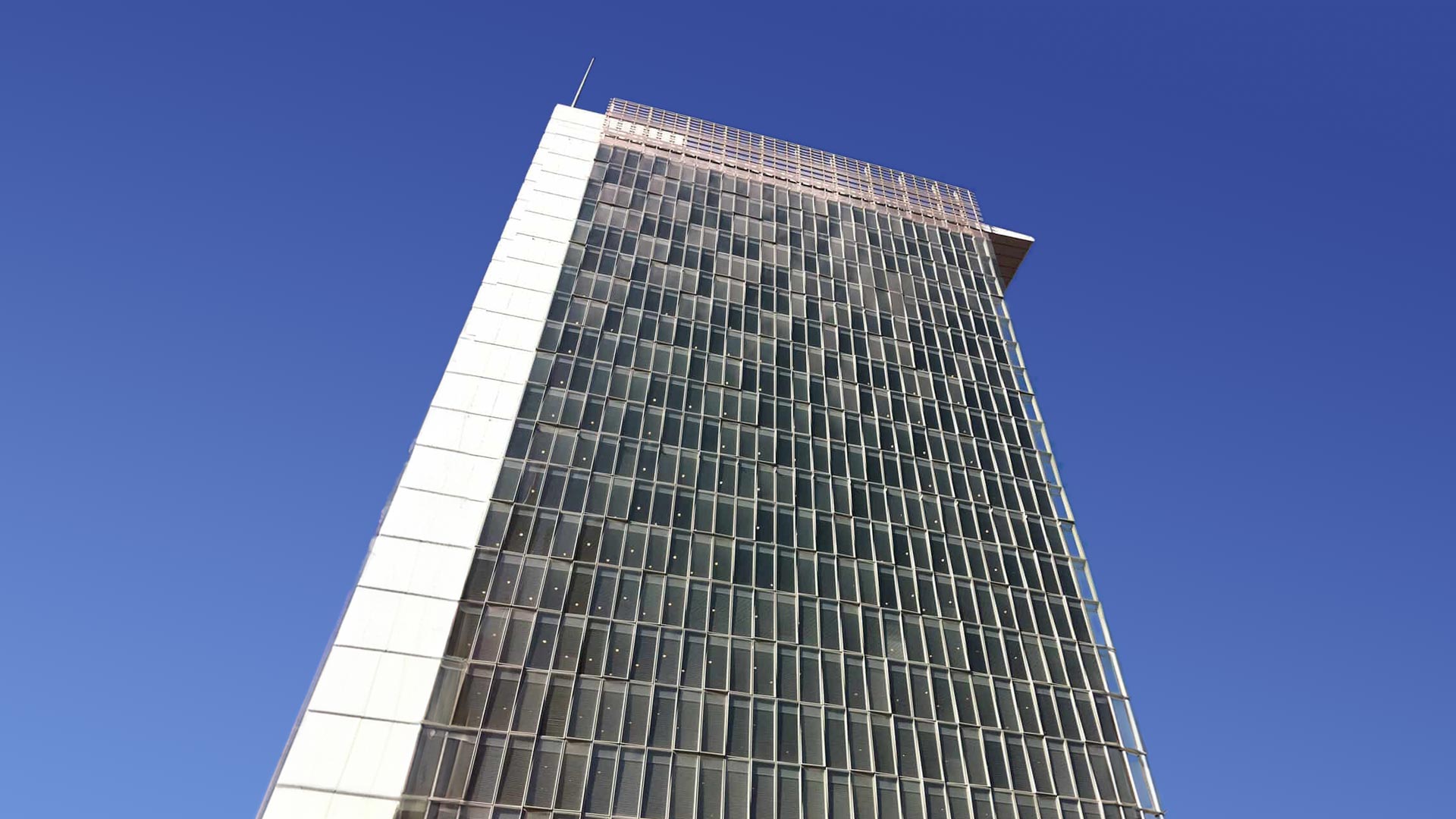
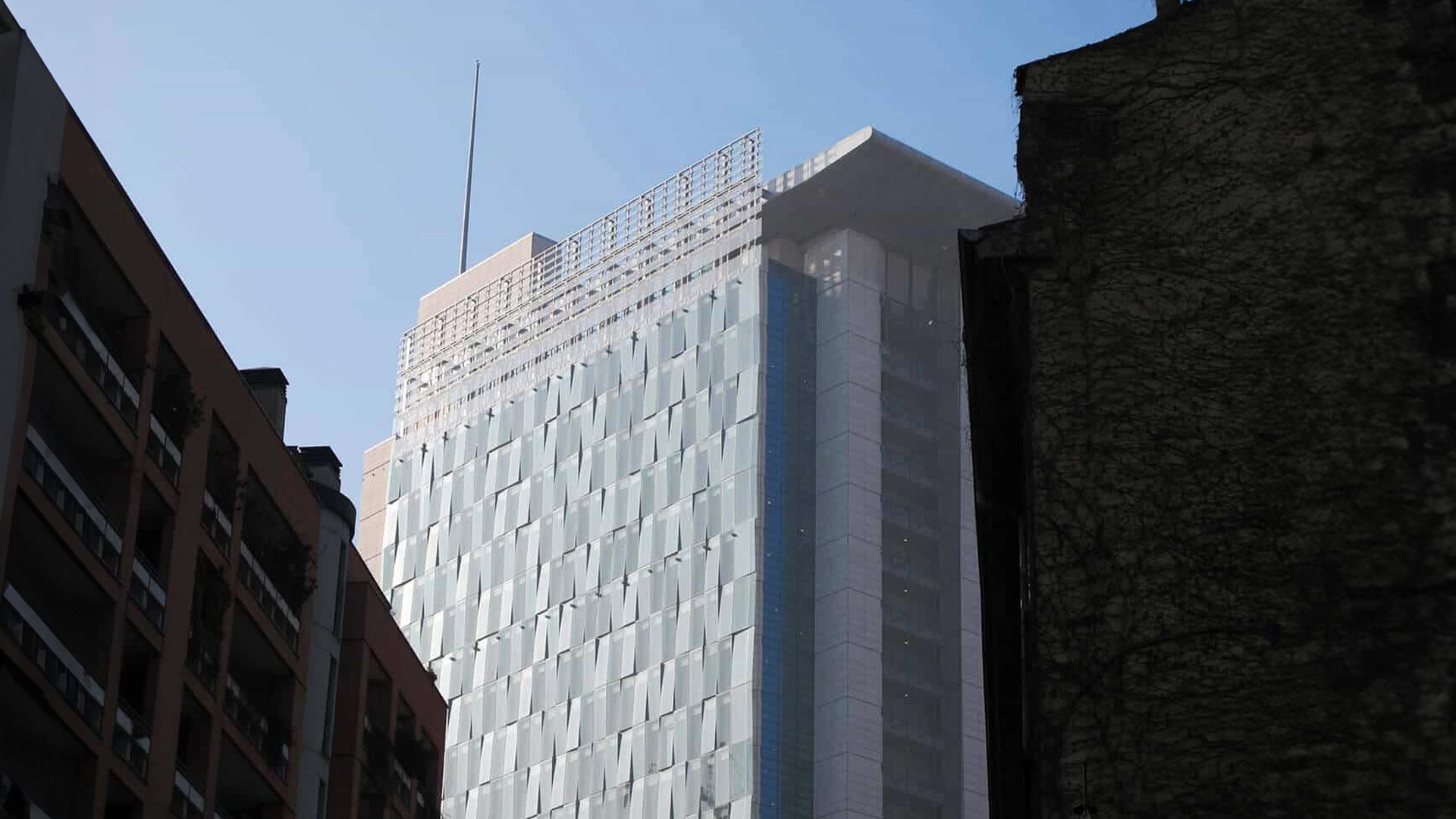
The design of the architectural “skin” of the main elevations is particularly refined: the “faceted” elements with four different angles of inclination reflect the sunlight like diamonds. Actually this is a technologically advanced cladding equipped with interactive ventilation cells that help control internal climate comfort. Today the complex stands alongside the UniCredit Towers and the Porta Nuova urban regeneration area – forming the “western gateway” to the district – symbolizing Milan’s openness to the future while remaining rooted in Milanese tradition in its choice of materials (ceramic, stone and glass) and the original treatment of the façades.
Sustainable architecture
The two nearly identical 100-metre-high buildings, designed by architects Laura Lazzari and Giancarlo Perotta, partly rest on a parking slab and partly on the structures and tunnels of Garibaldi railway station. They were originally a symbol – sometimes criticized – of postmodern Milanese architecture.
The redevelopment, designed by architect Massimo Roj of Progetto CMR, had the dual objective of renewing their image and transforming them into sustainable architecture that was among Italy’s most advanced at the time. The exteriors were completely redesigned and equipped with continuous vertical bands of photovoltaic panels, natural ventilation systems, interactive façades and bioclimatic greenhouses on every floor, resulting in a zero-emission complex.
A skin with an original design
The design of the architectural “skin” of the main elevations is particularly refined: the “faceted” elements with four different angles of inclination reflect the sunlight like diamonds. Actually this is a technologically advanced cladding equipped with interactive ventilation cells that help control internal climate comfort. Today the complex stands alongside the UniCredit Towers and the Porta Nuova urban regeneration area – forming the “western gateway” to the district – symbolizing Milan’s openness to the future while remaining rooted in Milanese tradition in its choice of materials (ceramic, stone and glass) and the original treatment of the façades.
Project implementation
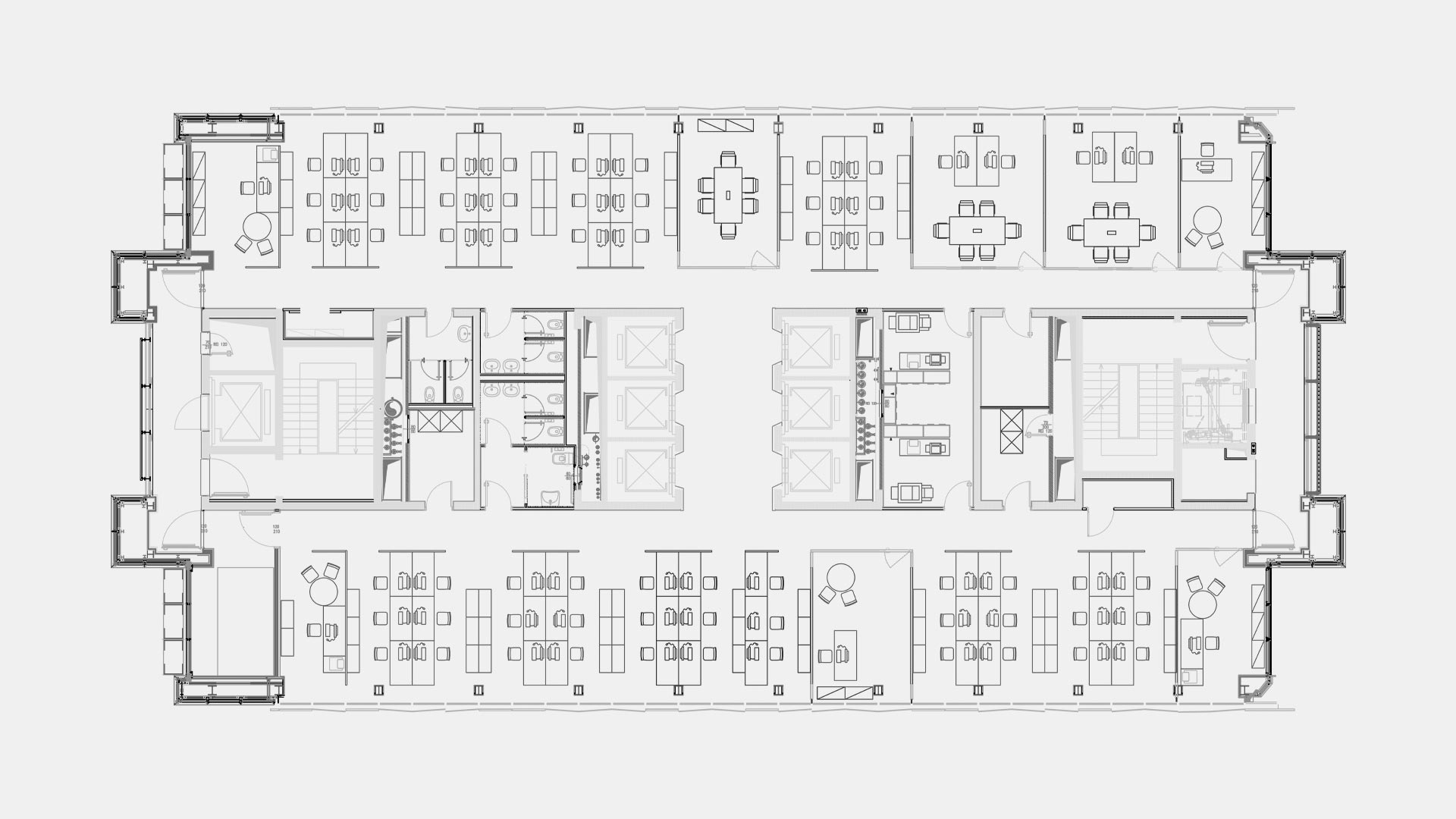
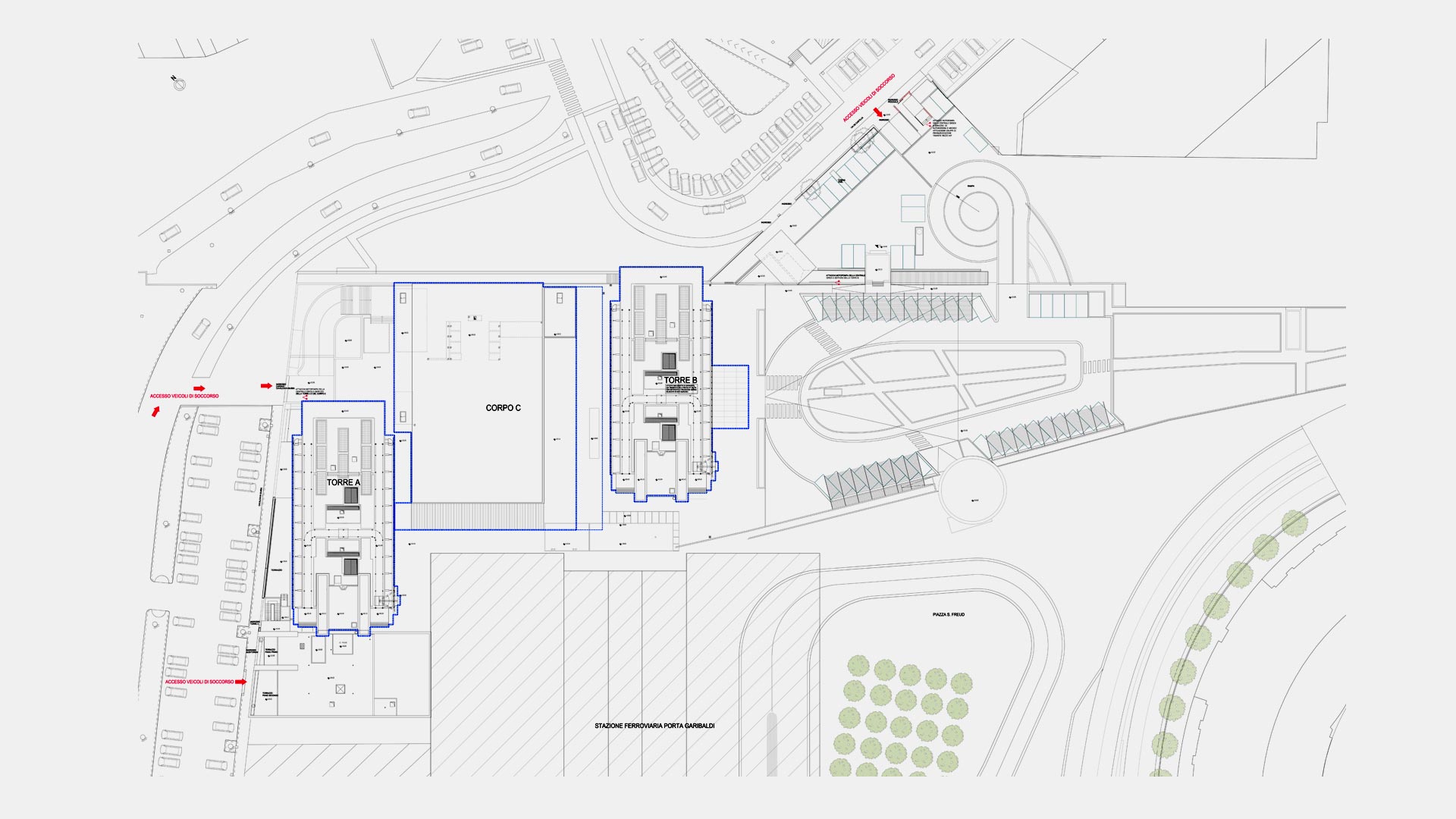
Studio A. Ferraresi – AF Engineering became involved after works on the east tower had already been completed. Andrea Ferraresi provided support to the client for validating the contractor’s design and acted as construction manager/clerk of works for the west tower (Tower A), the demolition and reconstruction of the buildings between the skyscrapers, and the structural strengthening at the base of the complex where it intersects with the railway infrastructures. This involved completely exposing the tower’s steel structure and demolishing the connecting bodies, which were replaced by a five-storey glazed volume (Building C).
Optimizing construction times
The main challenges were driven by the large scale of the intervention and the need to coordinate very different types of work and requirements. On one hand was the need to reinstall the façades very quickly across many floors, with the disadvantage of working above an active railway line and adjacent to an already occupied office tower – as well as having to lift personnel and materials to significant heights – but with the advantage of building on experience from the completed twin tower and performing repetitive, standardized operations that greatly optimized execution times.
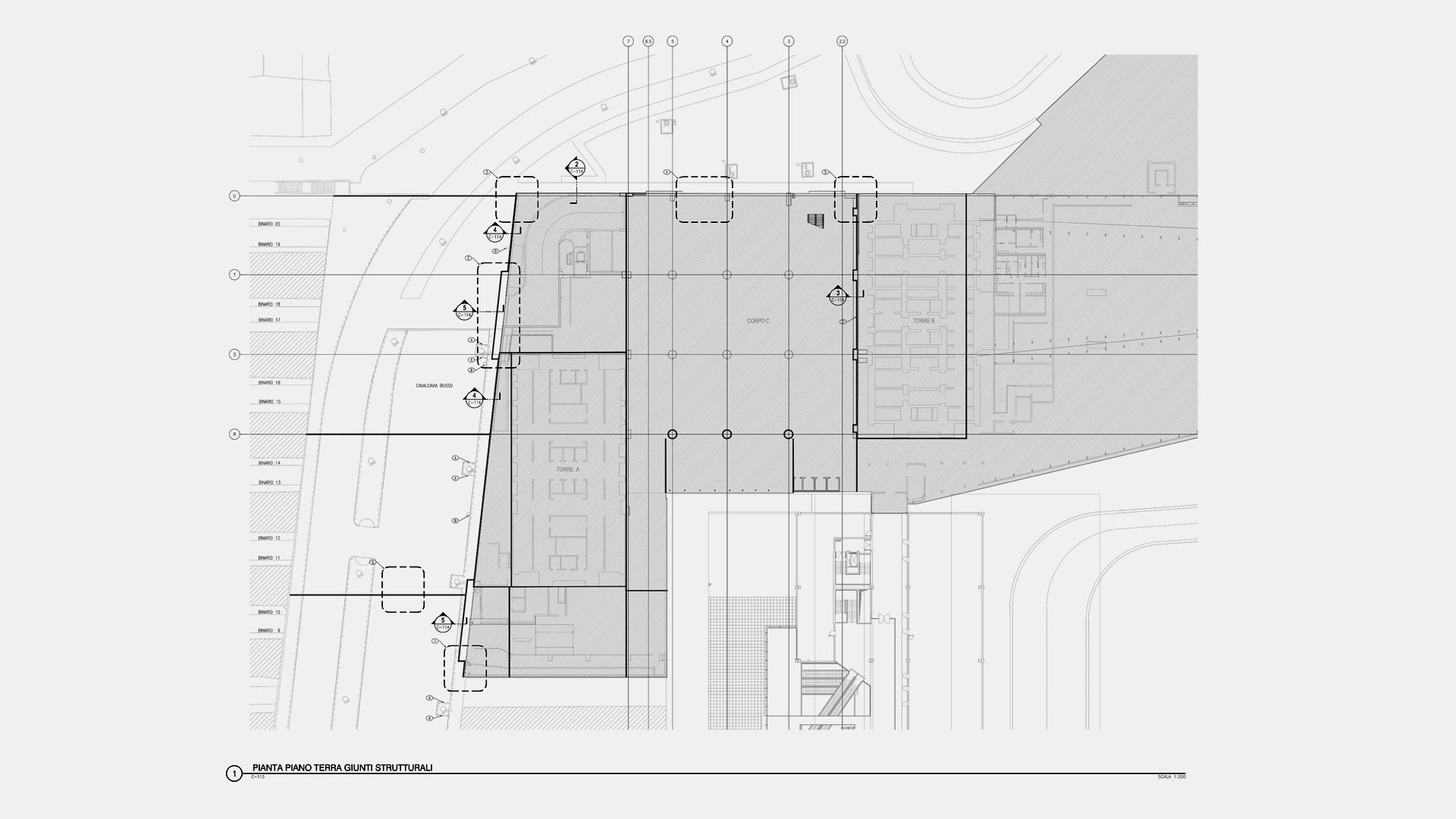
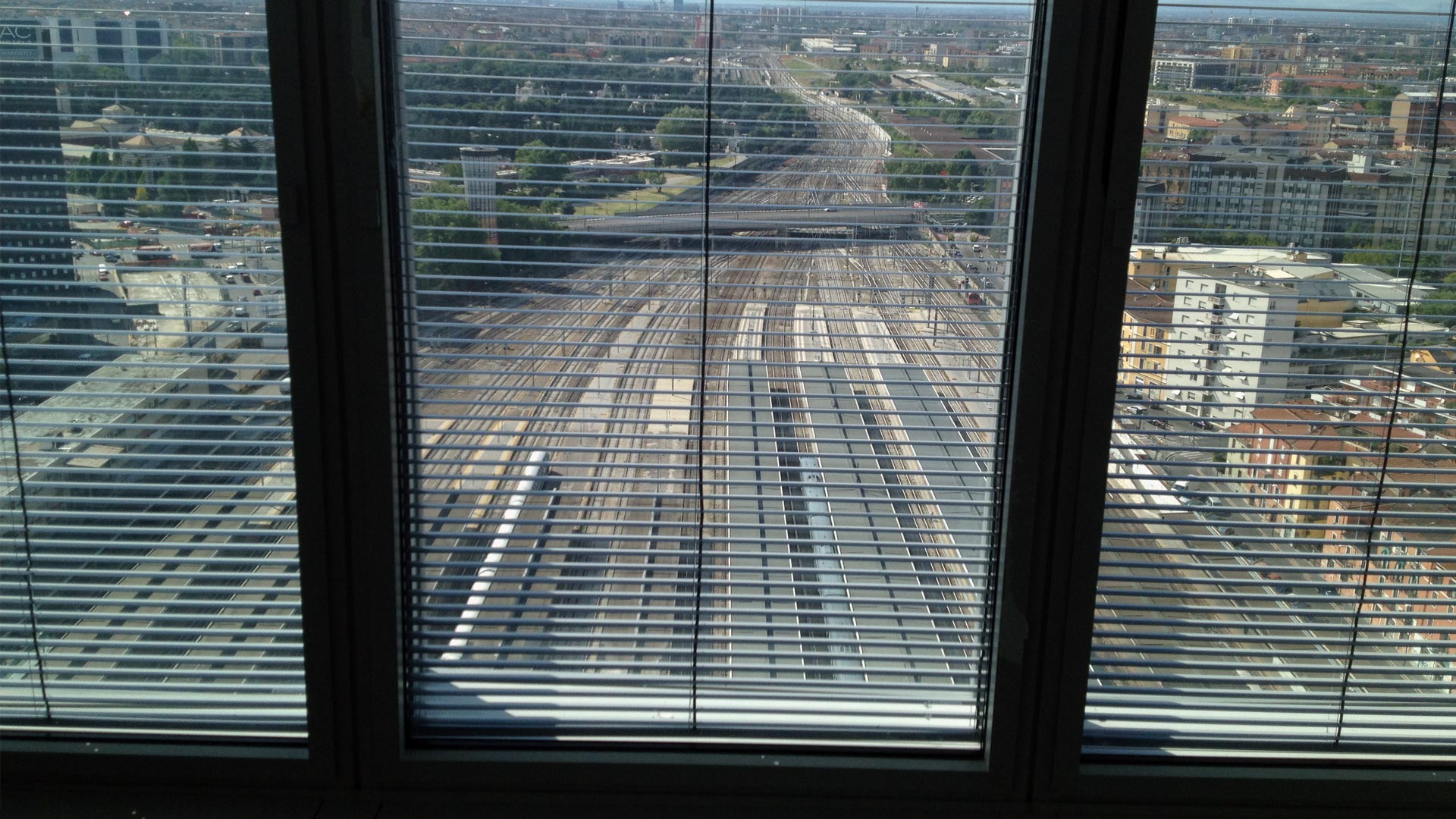
On the other hand was the unusual context of the intervention, a skyscraper directly above a heavily trafficked railway line, which compelled structural strengthening works to be carried out at night.
Project implementation
Studio A. Ferraresi – AF Engineering became involved after works on the east tower had already been completed. Andrea Ferraresi provided support to the client for validating the contractor’s design and acted as construction manager/clerk of works for the west tower (Tower A), the demolition and reconstruction of the buildings between the skyscrapers, and the structural strengthening at the base of the complex where it intersects with the railway infrastructures. This involved completely exposing the tower’s steel structure and demolishing the connecting bodies, which were replaced by a five-storey glazed volume (Building C).
Optimizing construction times
The main challenges were driven by the large scale of the intervention and the need to coordinate very different types of work and requirements. On one hand was the need to reinstall the façades very quickly across many floors, with the disadvantage of working above an active railway line and adjacent to an already occupied office tower – as well as having to lift personnel and materials to significant heights – but with the advantage of building on experience from the completed twin tower and performing repetitive, standardized operations that greatly optimized execution times.
On the other hand was the unusual context of the intervention, a skyscraper directly above a heavily trafficked railway line, which compelled structural strengthening works to be carried out at night.
Temporal offset between construction sites
Another challenge was the time offset between the construction site for the tower and that for the lower volume, which received municipal approval only after major progress had already been made on the skyscraper due to bureaucratic and formal reasons. This delay forced demolition works on the ground while façade panels were already being installed on the tower, overcoming a series of operational difficulties created by the proximity of the two processes.
Due to the complexity of the existing structures, even executing the ground connection for the new volume was demanding, requiring significant design and verification effort.
Project Highlights
The project took advantage from highly professional collaboration between both the contractor and the client. Thanks to Studio A. Ferraresi – AF Engineering’s solid experience in mediation during construction supervision, it was possible to resolve all the challenges produced by the compressed schedule and the extensive work sites. To demonstrate that a knowledgeable client is equivalent to a skilled orchestra conductor, effective construction manager is as indispensable as the first violin in ensuring the ensemble “works well”.