-
CESI Technology Park
and Headquarters -
CESI Technology Park
and Headquarters -
CESI Technology Park
and Headquarters
A multi-scale design
for Milan’s first technology park
Founded in 1956 by several major producers of electricity and electromechanical equipment, CESI (Centro Elettrotecnico Sperimentale Italiano - Italian Experimental Electrotechnical Centre) is today a global leader in independent testing, inspection and certification activities in the electrical sector. From the outset it has been based on a large site between Milan and Segrate, where several imposing industrial buildings were constructed, such as the “Lightning Factory” for high-voltage discharge research, along with various smaller laboratories and extensive green areas, forming Milan’s first “technology park.”
From the early 1970s, Studio A. Ferraresi – AF Engineering was appointed to coordinate the site’s urban and building development, responding with rational planning criteria to the significant growth in research and service facilities driven by a dynamic and rapidly expanding market.
-
Type:
Industry / Territorial planning
-
Location:
Via Rubattino 54, Milan
-
Year:
1972-present
-
Client:
CESI Spa
-
Type:
Industry / Territorial planning
-
Location:
Via Rubattino 54, Milan
-
Year:
1972-present
-
Services provided (Angelo and Andrea Ferraresi):
- Property Consulting
- Urban Planning
- Overall Site Layout
- Administrative and Bureaucratic Procedures
- Integrated Design
- Structural Design
- Construction Management
-
Architectural design:
Arch. Annalena Ferraris (Offices);
Arch. Giorgio Ferraresi (Canteen) -
Site area:
200,000 sq m
-
Gross floor area:
55,000 sq m
-
Client:
CESI Spa
Project Milestones
Urban definition
The first step involved drafting a kind of internal master plan for CESI, defining on a multi-year basis the location of new pavilions and the distribution of infrastructure for what had by then become a true urban-scale “district,” frequented by around 1,000 people including technicians, researchers, administrative staff and workers.
The most delicate aspect of this activity, carried out starting in 1972, concerned relations with the administrations of the two neighbouring municipalities. With them, specific zoning designation and technical implementation regulations were agreed upon in order to harmonize CESI’s expansion strategy with local urban planning.
New office and services complex
From 1972 onwards, Studio A. Ferraresi – AF Engineering has also acted in parallel as CESI’s reference point for bureaucratic procedures, site organization, construction supervision and, in many cases, the design of numerous newly built or modified pavilions.
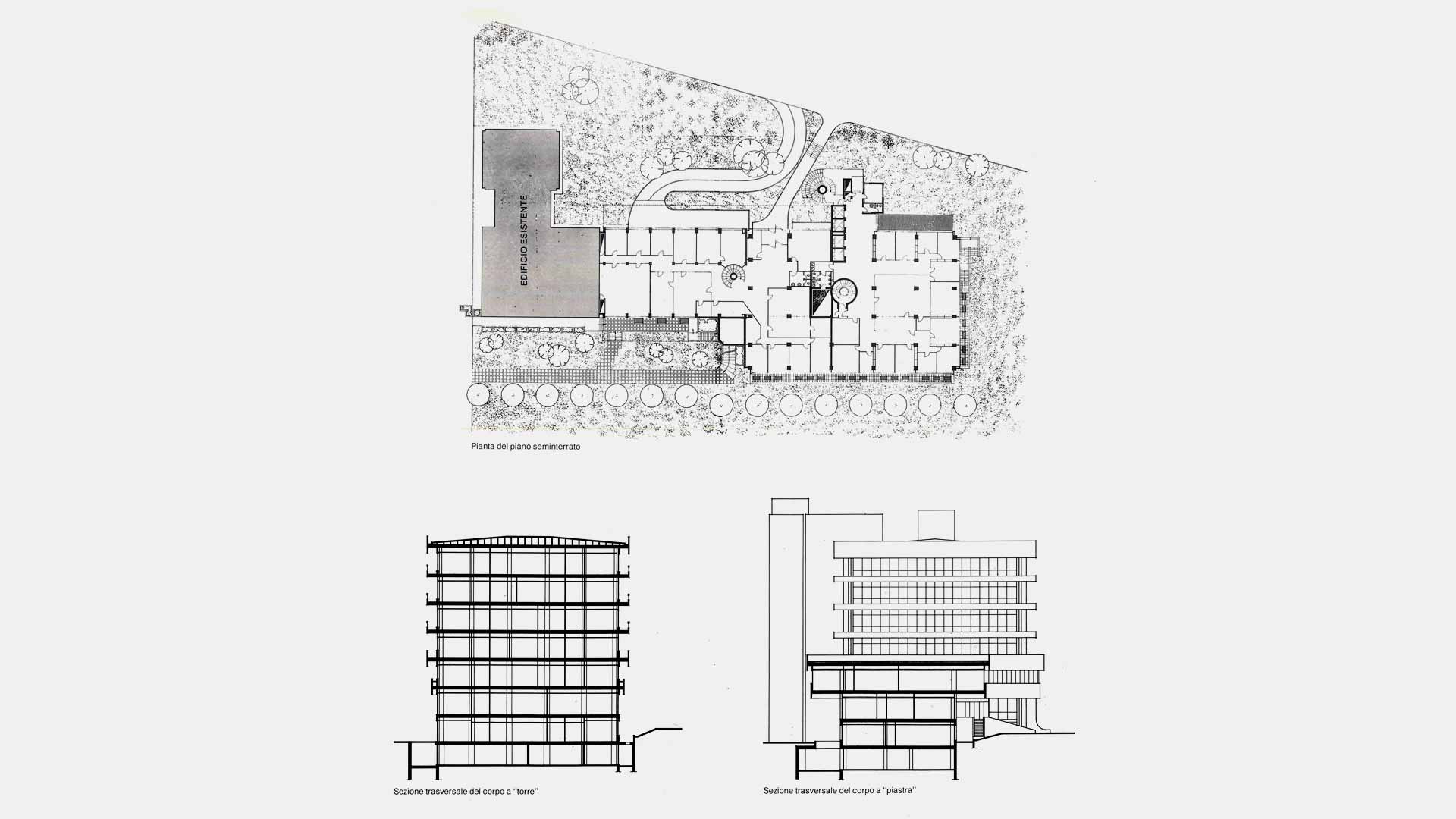
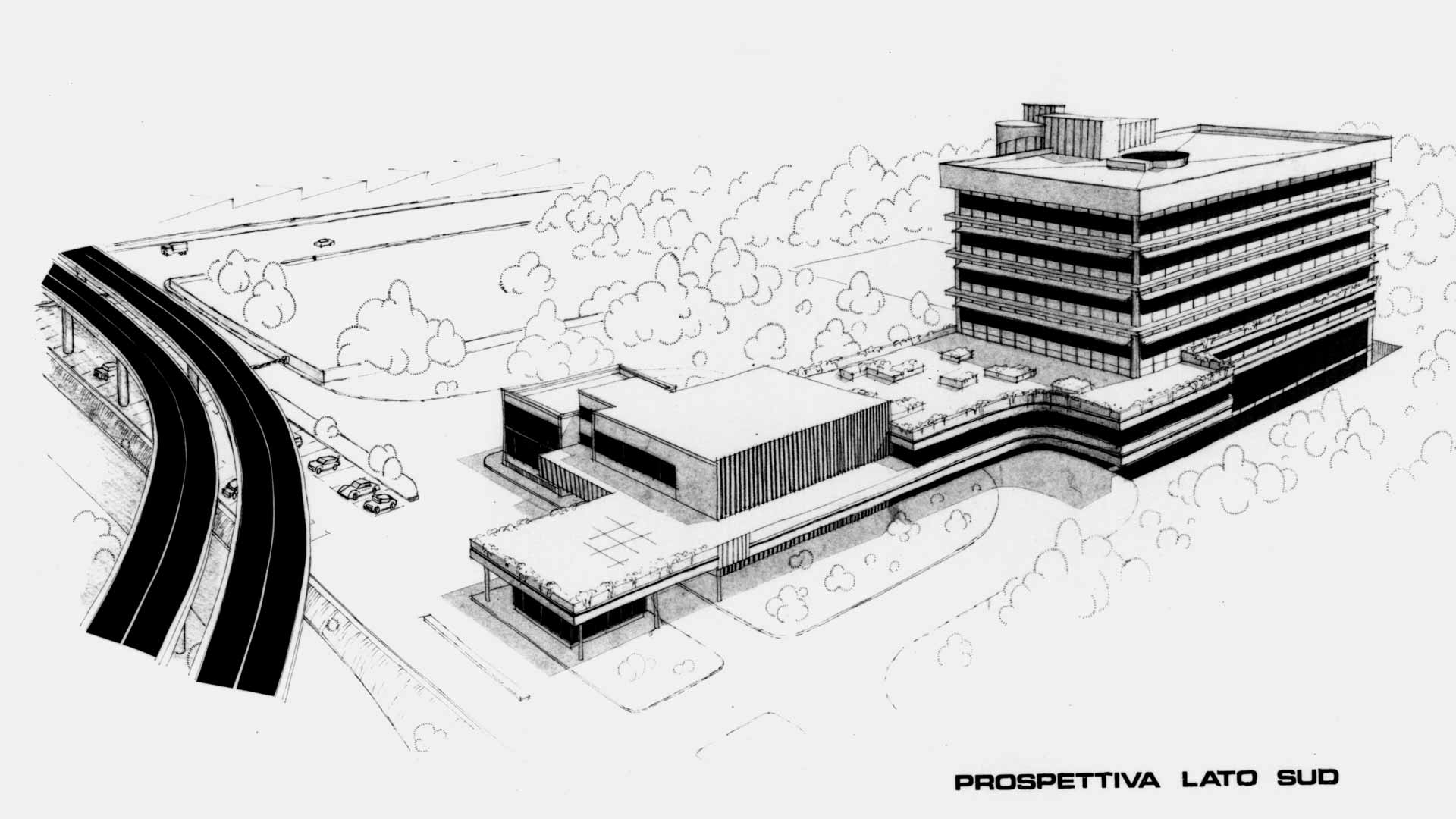
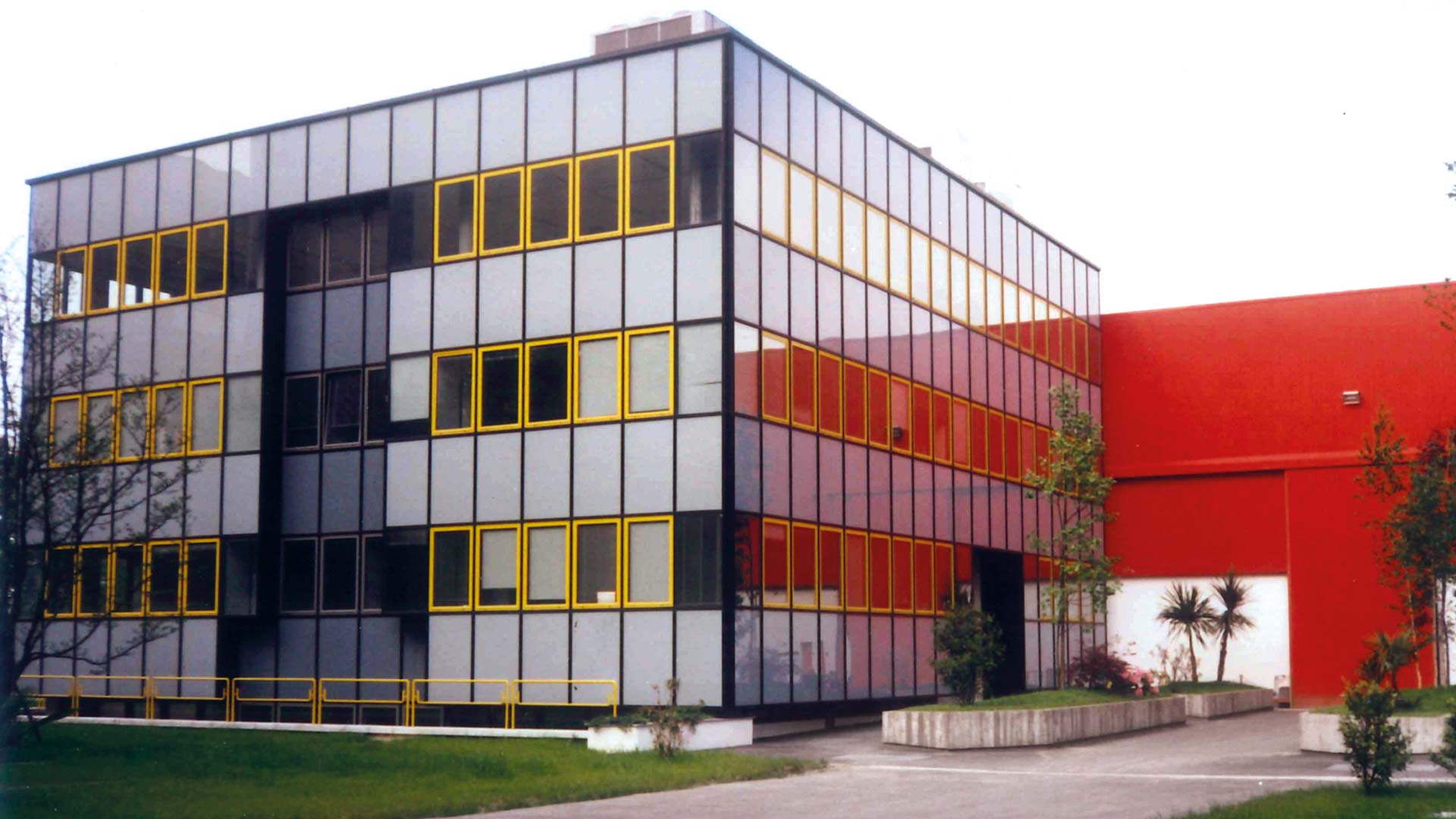
The first assignment concerned the expansion of the administrative facilities with new offices and laboratories. The new structure, designed by Angelo Ferraresi together with architect Annalena Ferraris, consists of a three-storey wide and low building with at the top a multi-storey tower with long ribbon windows. Particular care was devoted to interior finishes, both at ground-floor level and in the executive offices on the top floor, which were already at that time equipped with transparent, soundproof movable partitions.
Urban definition
The first step involved drafting a kind of internal master plan for CESI, defining on a multi-year basis the location of new pavilions and the distribution of infrastructure for what had by then become a true urban-scale “district,” frequented by around 1,000 people including technicians, researchers, administrative staff and workers.
The most delicate aspect of this activity, carried out starting in 1972, concerned relations with the administrations of the two neighbouring municipalities. With them, specific zoning designation and technical implementation regulations were agreed upon in order to harmonize CESI’s expansion strategy with local urban planning.
New office and services complex
From 1972 onwards, Studio A. Ferraresi – AF Engineering has also acted in parallel as CESI’s reference point for bureaucratic procedures, site organization, construction supervision and, in many cases, the design of numerous newly built or modified pavilions.
The first assignment concerned the expansion of the administrative facilities with new offices and laboratories. The new structure, designed by Angelo Ferraresi together with architect Annalena Ferraris, consists of a three-storey wide and low building with at the top a multi-storey tower with long ribbon windows. Particular care was devoted to interior finishes, both at ground-floor level and in the executive offices on the top floor, which were already at that time equipped with transparent, soundproof movable partitions.
Research laboratories
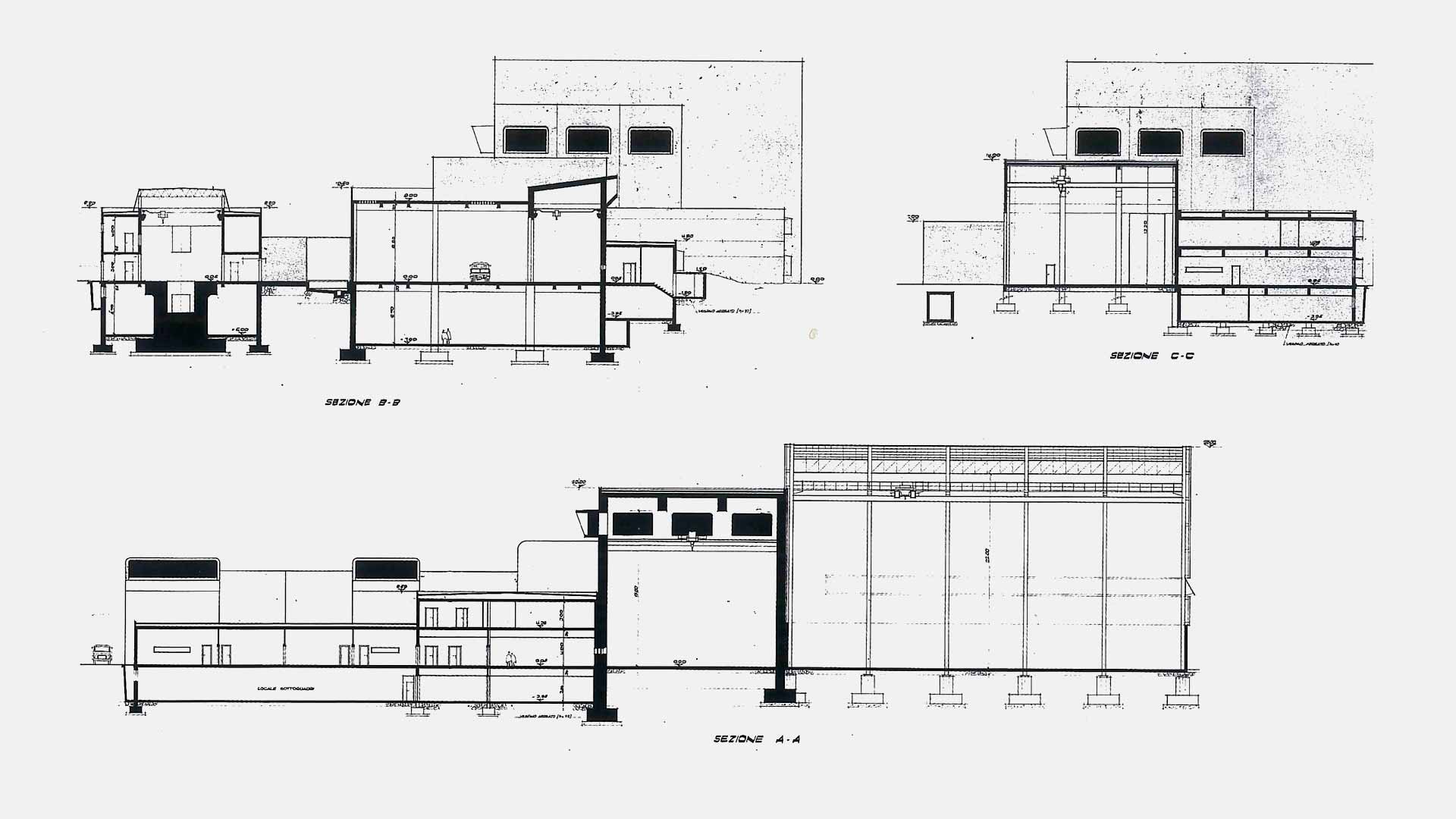
Between the 1970s and the early 1990s, the firm collaborated on the construction of numerous industrial halls, requiring a significant organizational and operational effort in terms of approvals, construction management and the selection of highly specialized companies capable of handling the technical fit-out.
These included the high-power synthetic testing laboratory (GPS), featuring a monolithic reinforced-concrete base measuring 15 × 5 × 7.5 m, capable of sustain the recoil generated by alternator testing; the pavilion for electromagnetic compatibility testing (EMC) of vehicle and aircraft components, with two large anechoic chambers; and the Pirelli laboratory for testing electrical cables.
Canteen and auditorium
Another major intervention was carried out between 1992 and 1995 with the construction of two reinforced-concrete buildings housing the corporate canteen, a representative restaurant and the auditorium. These are arranged around a small tree-lined square connected to the site’s overall gardens system. For the two square-plan buildings, articulated by the recessed porticoes, the firm carried out the complete design and construction management, with architect Giorgio Ferraresi responsible for the architectural definition.
Urban-planning consultancy and fire safety
From 2013 to 2015, Andrea Ferraresi once again assisted CESI with urban expansion planning. In parallel, from 2013 to 2023, he served as a fire-safety consultant for the various research laboratories. Given the complexity and continuous evolution of the industrial site, he contributed to defining an agreement with the fire department to achieve an efficient approach also to the formal bureaucratic aspects of fire prevention, framing individual laboratories flexibly within an overall unified certification framework.
Project Highlights
Over the course of its long managerial and operational involvement with CESI, Studio A. Ferraresi – AF Engineering has been able to work across multiple scales and types of intervention, leveraging its consolidated design and urban-planning expertise as well as an extensive network of highly specialised professional and technical-engineering firms.